Out of Hitler's Shadow
Debt, Guilt, and the German Economic Miracle
Format:Hardback
Publisher:Oxford University Press
Published:9th Oct '25
Should be back in stock very soon
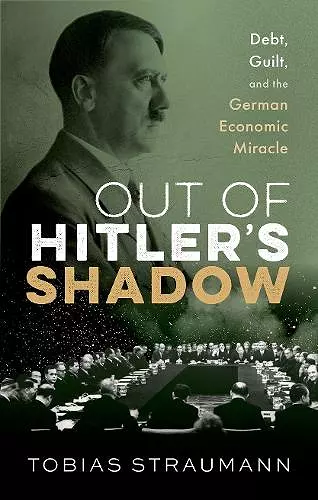
Why were the United States and its Western Allies so lenient after the most atrocious war of all times? Out of Hitler's Shadow answers this question, and considers why the Allies concluded that imposing unrealistic financial conditions on a defeated country would do more harm than good. The destruction left by Nazi Germany was horrendous. The occupied countries had been ravaged and plundered, millions of people murdered, cities laid in ashes. There was every reason to make the defeated Germans pay for 'Hitler's debt' as The New York Times called the gigantic damage inflicted. But whereas the Soviet Union punished East Germany, the Western Allies, at the London Debt Conference (1952) decided to forgo all war-related debts. The Federal Republic of Germany - the Western successor state of Nazi Germany - had to settle no more than half of all outstanding debts stemming from pre-war obligations and post-war assistance. Only Israel and private Jewish organisations received reparations from the Federal Republic, but it was a modest amount. Why were the United States and its Western Allies so lenient after the most atrocious war of all times? Out of Hitler's Shadow answers this question, and considers why the Allies concluded that imposing unrealistic financial conditions on a defeated country would do more harm than good. These actions challenged widely held notions of justice. People who had suffered most from the atrocities committed by Nazi Germany were not compensated. The deal was unfair in many ways, but diplomats and politicians had to make hard choices. Five statesmen were particularly bold: U.S. Secretary of State Acheson, German Chancellor Adenauer, French Foreign Minister Schuman as well as Israeli Prime Minister Ben-Gurion and Foreign Minister Sharett. Tobias Straumann explains why the personalities involved deserve to be remembered for their strategic clarity in the face of enormous resistance.
This is a story of risk, courage and contingency, told with verve and vivid details... This well-written book resurrects that important chapter in international history. * Frank Trentmann, Financial Times *
Out of Hitler's Shadow is a substantial and thoughtful contribution to the history of post-war Europe. It demonstrates with clarity that financial settlements were constitutive elements of political order, not administrative afterthoughts. As an account of how Western actors rendered German debt manageable after 1945, it is likely to become a reference point. The book will be of particular value to scholars and postgraduate students in European history, international political economy and diplomatic history, as well as to advanced courses on post-war reconstruction. * Rana Abhyendra Singh, European Review of History: Revue européenne d'histoire *
Out of Hitler's Shadow is a book that sets out, with cool archival confidence and quiet provocation, to dismantle one of the most comfortable moral myths of postwar Europe: that Germany's economic and political rebirth after 1945 represented a clean break from the structures, elites, and habits that had sustained Nazism. * Sri Lanka Guardian *
ISBN: 9780192849519
Dimensions: 224mm x 146mm x 30mm
Weight: 419g
288 pages