Converting Verse
The Poetics of Asceticism in Late Roman Gaul
Format:Hardback
Publisher:Oxford University Press Inc
Published:23rd Dec '24
Currently unavailable, and unfortunately no date known when it will be back
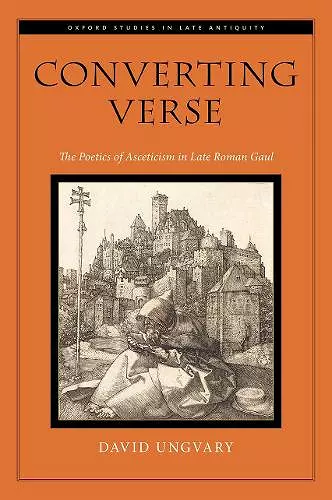
For centuries, the Roman aristocracy encoded its social and cultural superiority in classical poetry. In the late Roman world, however, Christian poets--especially those in the outlying provinces of Gaul--began to experiment with poetry as a medium for exploring and asserting ascetic identities which were based on the disciplined rejection of worldly life and set in opposition to secular nobility. Converting Verse offers a new cultural history of this ascetic transformation of Latin poetry and fortifies our understanding of the Christianization of Roman culture in Late Antiquity. It provides a fresh account of the ways Gallo-Roman Christian poets composed verse amid barbarian incursions, the rise of monasticism, and the collapse of the Western Roman Empire itself, showing how they responded to cultural instability with literary performances of spiritual discipline and religious reform. Through the fifth century, these poets--Paulinus of Nola, Paulinus of Pella, Sidonius Apollinaris, and Avitus of Vienne, among others--wrote poetry that urged and expressed the recalibration of traditional dynamics between literature and identity in the Roman world, and in the process reinvented Latin poetry's power and purpose. Drawing on critical insights from classical studies, religious studies, and literary theory, David Ungvary argues that the significance of Christian poetic experimentation was not restricted to the aesthetic domain but had profound social and cultural implications as well. In the unsettled world of late Roman Gaul, Christian verse writing produced strategies and practices of authorship, religious conversion, and Christianization that informed the emergent cultures of the post-Roman West.
Why write poetry? As David Ungvary shows, this question urgently occupied authors in Late Antique Gaul. Through a brilliant exploration of their answers, using a wide range of texts, Ungvary advances our understanding of the relationship between Late Antique Christianity and classical Latin verse- their fault lines and common ground - and of the practices and poetics of Christian conversion. The book is necessary reading for anyone interested in how poetry became Christian in Late Antiquity. * Scott McGill, Rice University *
Converting Verse spotlights a series of daring literary experiments in harmonizing the expressive modes of classical poetry and Late Antiquity's burgeoning monastic discourses. In pages rich with insights, David Ungvary deftly argues that these negotiations between poets and ascetic impresarios spurred the reinvention of poetry's power and legitimized verse composition as an ascetic practice. * Dennis E. Trout, University of Missouri *
"Converting Verse" tackles a difficult historical question through an analysis of textual evidence that is reluctant to divulge clear answers. The book is at its best when Ungvary applies his skills as a Latinist to the analysis of the fifth-century poems that form the basis of his study. Readers will surely benefit from his close reading of the Epigramma Paulini and the poems of Pauli-nus of Pella, Sidonius Apollinaris, and Avitus of Vienne. * Scott G. Bruce, Late Antiquity *
The book is at its best when Ungvary applies his skills as a Latinist to the analysis of fifth-century poems that form the basis of his study. Readers will surely benefit from his close reading of the Epigramma Paulini and the poems of Paulinus of Pella, Sidonius Apollinaris, and Avitus of Vienne. * Plekos *
The book should be read by anyone interested in late antique or medieval Latin poetry. All texts are well translated, including a complete translation of Ennodius' Eucharisticon co-authored with one of U.'s students. * Cillian O'Hogan, The Classical Review *
Ungvary's synthetic approach to the poetry of fifth-century Gaul allows us to see how better and less well-studied poems fit together in contemporary debates about verse and conversion. It emerges that poetry and conversion were both complex undertakings, and different people approached them in different ways. Converting Verse makes a helpful and honest contribution by showing how much each can teach us about the other without losing sight of that complexity. * Bryn Mawr Classical Review *
ISBN: 9780197600740
Dimensions: 226mm x 152mm x 33mm
Weight: 499g
288 pages