Wounds of Silence
Legacies of Genocide and Racial Violence
Format:Hardback
Publisher:Oxford University Press Inc
Published:5th Oct '26
Currently unavailable, and unfortunately no date known when it will be back
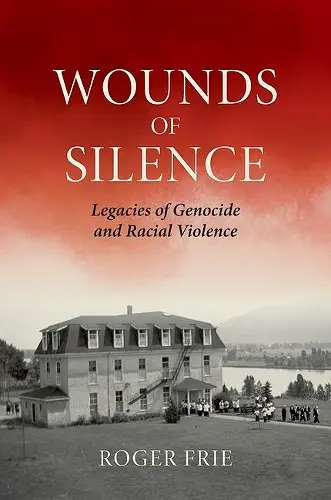
What does it mean to pursue the comfort of daily life alongside legacies of profound injustice? What are the ethical demands that histories of atrocity place on us, even if we did not participate in them? These are the kind of questions that lay at the heart of this book, which explores the nature of silencing, accountability, and the obligations we have to each other as individuals and as a society. Award winning author and psychoanalyst Roger Frie travels to sites of atrocity to meet with descendants of survivors and perpetrators of the Holocaust in Germany, the Indigenous genocide in Canada, and the legacy of lynching in the United States. Wounds of Silence melds survivor testimony, history, and personal reflection with a wealth of illustrations and psychological insights. The book is fundamentally cross-disciplinary and deals with the following areas: memory studies, genocide studies, trauma studies, Holocaust studies, psychosocial studies, and psychoanalysis. The stories and lessons that the author shares will remain with readers long after they have finished. This book is essential reading for anyone who wants to understand what is involved in confronting silence and indifference, engaging in reparative acts of memory, and working towards racial justice in the present. At a time when authoritarian governments use silencing to quell dissent and dictate how the past is remembered, this book serves as a warning, a plea for tolerance, and a recognition of human rights.
Interviewed about the "online resource launched by German newspaper Die Zeit [to] discover whether relatives were card-carrying members of the Nazi party, Roger Frie, the author of Not in my Family: German Memory and Responsibility After the Holocaust, says the tool has enormous importance. 'There's always been this focus on collective ... responsibility for the Holocaust, whilst at the same time, there has been a hesitation to research [one's] own family.' Prof. Frie, whose next book is about silencing dark histories, believes this initiative is particularly significant given the current political climate, with antisemitism on the rise, including on the far right in Germany. 'It suddenly shifts your perspective. It's no longer abstract, it's no longer back there.' * The Globe and Mail *
With all the empathy and acumen of a trained psychotherapist, Professor Frie offers us a profoundly personal and moving meditation on the legacies of trauma, obligations of memory, and ethical demands of history in perpetrator societies. Even as we in the USA currently contend with an alarming rise in antisemitism and a sweeping public erasure of historical injustices, this work combats silencing and denialism, urges reckoning and responsibility, and affords timely and compelling insights. * Professor Joseph P. Gone, Ph.D., Harvard University Native American Program *
In this moving personal inquiry into the structures of silence that sustain the persistence of historical trauma across histories, geographies, and generations, Roger Frie listens with openness, care and compassion to survivors and descendants of the Holocaust in Germany, Indigenous genocide in Canada, and racial terror in the United States. This ever more timely book offers us ways to grapple with human capacities for destruction by modelling a relational practice of healing and repair. * Marianne Hirsch, author of The Generation of Postmemory: Writing and Visual Culture After the Holocaust *
Wounds of Silence is a fascinating, disturbing, all too timely inquiry into the ways in which otherwise thoughtful, caring human beings can shut out the atrocities occurring in their midst. Harrowing though many of the scenes he describes are, Frie avoids being sensationalistic or moralistic. As an historian, philosopher, and psychoanalyst, he is first and foremost a careful, astute explorer of the human condition whose main aim is to speak the truth of painful pasts, unadorned, and with his stories in hand, to chart a path forward for remembrance and repair. An immensely important-and, in its way, hopeful-read. * Mark Freeman, Distinguished Professor of Ethics and Society Emeritus, Department of Psychology, College of the Holy Cross and Senior Fellow, Center for Psychological Humanities and Ethics, Boston College *
This book offers a rare and important analysis that draws on the author's lived experiences and on rich and useful comparative insights from fieldwork in Germany, Canada, and the United States. Roger Frie articulates the multiple meanings of silence with nuance and intellectual grace and provides a timely contribution to literature on remembering, trauma, and repair after violence. * David Mwambari, author of Navigating Cultural Memory: Commemoration and Narrative in Postgenocide Rwanda (Oxford) *
We live in places haunted by histories of violence and injustice. Roger Frie astutely mentors us to turn toward and reckon with these histories, replacing denial, silence, and ignorance with acknowledgment and accountability. While addressing the past, this compellingly wise book points us toward building the more compassionate and just futures that we deeply desire. * Mary Watkins, author of White Work and Reparative Genealogy: Reckoning with Ancestral Debt as a Path to Racial Reparations *
ISBN: 9780197852491
Dimensions: 235mm x 156mm x 19mm
Weight: 558g
270 pages