Complicity in Fin-de-siècle Literature
Format:Hardback
Publisher:Oxford University Press
Published:20th Jun '24
Currently unavailable, and unfortunately no date known when it will be back
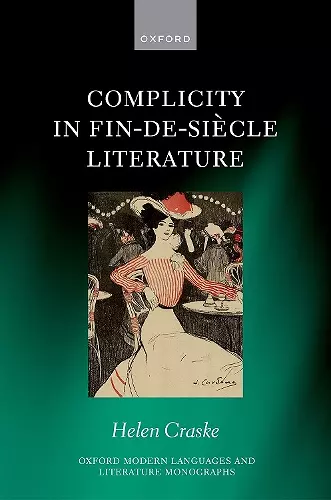
Complicity in Fin-de-siècle Literature examines late-nineteenth century French understandings of literature as a morally collusive medium, which implicates readers, writers, and critics in risqué or illicit ideas and behaviour. It considers definitions of complicity from the period's evolving legal statutes, critical debates about literary 'bad influence', and modern theories of reader response, in order to achieve a deeper understanding of how cultural production of the period forged relationships of implication and collusion. While focusing on fin-de-siècle French culture, the book's theoretical discussions provide a new terminology and conceptual framework through which to analyse literary influence and reception, applicable to different historical periods and national settings. Interdisciplinary in nature, the study draws on methods associated with close reading, literary history, law and literature studies, cultural studies, and sociology of literature. Each of the book's chapters highlights how particular literary themes or techniques encouraged readers' identification with transgression and facilitated alternative forms of solidarity. The analysis draws on a range of case studies from different media forms, including: Naturalist, Decadent, and psychological novels, biographically revealing fiction ('romans à clef'), little magazines ('petites revues'), and saucy magazines ('revues légères'). Texts written by well-known literary figures--such as Émile Zola, Octave Mirbeau, and Rachilde--appear alongside previously overlooked periodical and archival sources. The book's varied corpus reveals the widespread appeal of risqué topics and illicit solidarity across the literary spectrum.
Craske (junior research fellow, Oxford Univ., UK) shows her brilliance in this book, especially in the introduction and first chapter. In these pages in particular, she evidences extensive research, stunningly mature theoretical construction, and polished writing. * A. M. Rea, CHOICE *
Through her excavations in archives and overlooked library shelves, Craske brings to light compelling sources of lived and literary forms of complicity, subversion, and punishable obscenity. * Susan Harrow, French Studies *
Craske analyzes complicity from a literary-historical perspective, examining moral and legal debates on the influence of illicit literature, as well as from a meta-literary perspective, studying the role of rhetorical devices in collusive and collaborative exchanges. In her "four-pronged" methodology, Craske privileges close readings, literary history, the sociology of literature, and cultural studies, drawing extensively from Pierre Bourdieu's relational model for textual reception. Her monograph is composed of five thoroughly researched chapters that may be read in succession or as independent studies. Complicit in the conventions of an academic review, the paragraphs that follow provide a summary of each chapter, but the intricacies of Craske's close readings and precise attention to detail surpass what can be fully encapsulated here. * Sharon Larson, Nineteenth-Century French Studies *
ISBN: 9780198910190
Dimensions: 240mm x 160mm x 20mm
Weight: 522g
236 pages