Africans in Colonial Mexico
Absolutism, Christianity, and Afro-Creole Consciousness, 1570-1640
Format:Paperback
Publisher:Indiana University Press
Published:23rd Feb '05
Currently unavailable, and unfortunately no date known when it will be back
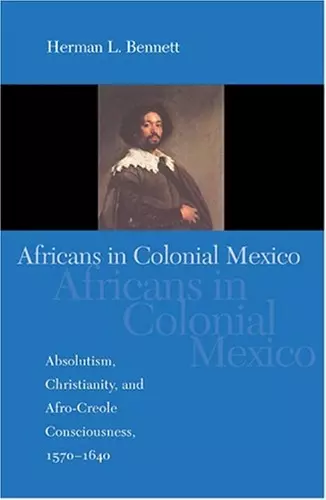
This book examines the African community in colonial Mexico, revealing their complexities under Spanish and Catholic governance. Africans in Colonial Mexico offers fresh insights into their lives.
In Africans in Colonial Mexico, Herman L. Bennett explores the intricate lives of the African community in colonial Mexico, highlighting both free and enslaved individuals. This comprehensive study reveals how their identities were shaped under Spanish and Catholic rule, offering a fresh perspective on their experiences and contributions to society. Bennett meticulously examines the regulatory frameworks imposed by the government and the Church, shedding light on the socio-political dynamics that influenced their daily lives.
The book delves into the significant impact of the Inquisition on the African population, providing insights into their legal status concerning marriage, rights, and obligations as Christian subjects. Through rigorous research and analysis, Bennett uncovers previously overlooked aspects of their existence, illustrating the resilience and agency of Africans in a colonial context. By doing so, he challenges traditional narratives and encourages readers to reconsider the complexities of identity formation in the New World.
Africans in Colonial Mexico not only charts new directions in understanding these identities but also emphasizes the importance of recognizing the diverse experiences within the African community. Judith A. Byfield from Dartmouth praises Bennett's masterful approach, making this book a significant contribution to the fields of history and African diaspora studies.
"Bennett (Rutgers Univ.) relies on church records, especially marriage licenses and Inquisition prosecutions, to reveal aspects of the social and legal lives of Africans and their descendants, slave and free, in colonial Mexico. He begins by establishing the scale of the African presence, saying that Africans outnumbered Spaniards and that early New Spain's black population was larger than Brazil's. He notes, as others have, that Africans participated in the conquest and often served in an intermediary role, supervising indigenous labor and Hispanicizing the Indians. Bennett focuses not on work or living conditions, but on Africans' ability to manipulate power through their understanding of the law. Blacks, being Christians and thus considered persons with souls, enjoyed certain rights. For example, the church granted them the right of conjugality, which superceded their masters' property rights. Africans, Bennett argues, took advantage of these limited rights to make lives for themselves. By manipulating the interstices between canon and property law, Africans carved out niches for themselves and made their lives better. This thorough study informs on a number of historical fields, including the history of slavery, diaspora studies, identity, Spanish imperial history, church history, creolization, and the Hispanicization of Indians. Summing Up: Recommended. Graduate students and faculty.February 2004"—S. A. Harmon, Pittsburg State University
"Africans in Colonial Mexico by Herman Bennett marks a major advance in the still underdeveloped field of Afro-Mexican history by using Inquisition records to investigate Afro-Creole consciousness in the mature colonial period.40.3 2005"—Latin American Research Review
"..Bennett's book represents a significant contribution to the scholarship on the African experience in colonial Mexico and to our understanding of the interface between the public domain of church and state and the private one of personal lives."—net
". . . a remarkable feat in reconstituting the lives of New Spain's early African population . . . and in offering a new vantage point from which to study this important component of the African Diaspora."—net
ISBN: 9780253217752
Dimensions: unknown
Weight: 435g
228 pages