Terra Nova
Food, Water, and Work in an Early Atlantic World
Format:Hardback
Publisher:Yale University Press
Published:6th Jan '26
Should be back in stock very soon
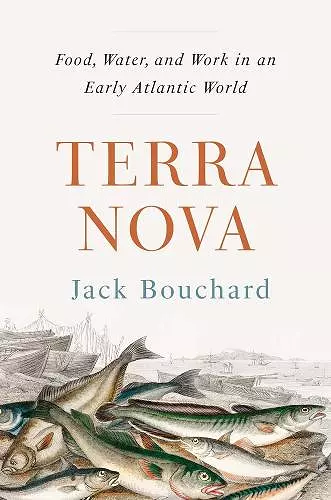
A bottom-up story of the fishworkers, whalers, First Nations, merchantwomen, oceans, and animals who together made a new colonial world in the early Atlantic
In the early decades of the sixteenth century, mariners from across Europe forged a vast seasonal fishery along the coasts of the northwest Atlantic. Long before there was Newfoundland or Canada, Europeans called this floating colony Terra Nova, and they laid the foundation for a history of extracting food and fuel that extended into the twentieth century. Once one of the largest European colonies in the Atlantic basin, Terra Nova has never before been considered in its historical entirety or in a wider Atlantic context.
Historian Jack Bouchard tells the story of Terra Nova, showing that its early development was shaped by colonial histories across the Atlantic world. He demonstrates that when we put food production, ocean environments, and maritime labor at the center of the story, we can see the overlooked lives and voices of those who made change in these early years. The result is a new history of the Atlantic world: one where humans migrate in the wake of ice and fish, where Indigenous American and Arctic trade routes are joined to transatlantic exchange, where colonies exist without settlement or empire, and where food production, labor, and maritime landscapes are at the center of our shared history.
“Bouchard has simultaneously laid the groundwork for understanding the more ‘formal’ colonial objectives that would later follow. . . while also providing a productive glimpse into a consequential corner of the Atlantic.”—Zeb Baker-Smith, Aspects of History
2026 George Perkins Marsh Prize finalist, sponsored by ASEH
Winner of the John R. Lyman Book Award in North American maritime history, sponsored by the NASOH
2026 Best Book in Canadian Environmental History Prize winner, sponsored by the Network in Canadian History and Environment
“This engagingly written history of the Atlantic world in the sixteenth century is crammed with fascinating facts and anecdotes, and reveals a teeming world of fish, fishworkers, and sailing ships that made the waters and shores of Newfoundland and adjacent lands into a hive of activity and a hub of maritime connections.”—Allan Greer, author of Property and Dispossession: Natives, Empires and Land in Early Modern North America
“By extending the history of cod fishing back into the sixteenth century, this important book helps us reenvision colonial history through the lens of Terra Nova, a malleable maritime space of colonial extraction without land‑based settlement.”—Jakobina K. Arch, author of Bringing Whales Ashore: Oceans and the Environment of Early Modern Japan
“An essential read on the worlds made by people, fish, and ocean in the North Atlantic, Terra Nova is a sweeping look at food and work that unsettles our definitions of colonialism in the sixteenth century.”—Bathsheba Demuth, author of Floating Coast: An Environmental History of the Bering Strait
“In this bold and imaginative book, Bouchard restores historical significance to a region often overlooked in favor of landed colonial ventures. Rooted in deep research, Terra Nova draws insights from environmental history, food studies, and labor history to tell a profoundly human story. A must read.”—Brett Rushforth, author of Bonds of Alliance: Indigenous and Atlantic Slaveries in New France
“With the skills of a maritime detective, Jack Bouchard went fishing in the archives and returned with captivating results, moving the northwest Atlantic from the margins to the center of our understanding of the early modern basin. The cod, along with the waters it occupied and the humans that fished it, was as important to that age as sugar or tobacco. Many who go fishing tell tall tales about the one that got away. Bouchard’s story is all the better because it is true.”—Peter C. Mancall, author of The Trials of Thomas Morton: An Anglican Lawyer, His Puritan Foes, and the Battle for a New England
ISBN: 9780300264357
Dimensions: unknown
Weight: unknown
344 pages