Conspiracy
The History of a Political Obsession
Format:Hardback
Publisher:Harvard University Press
Publishing:30th Oct '26
£27.95
This title is due to be published on 30th October, and will be despatched as soon as possible.
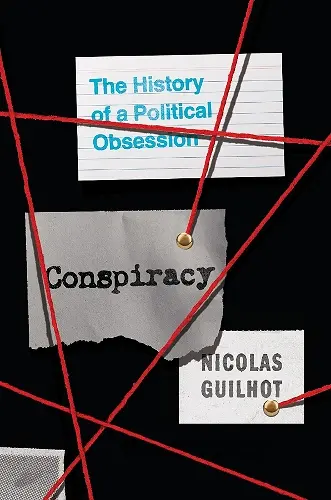
A bracing intellectual history that illustrates how the modern and contemporary obsession with conspiracy theories stems not from the slipperiness of truth but from the inability to imagine a positive future.
Pundits, scholars, and the general public alike have argued that conspiratorial thinking is the greatest threat to liberal democracy. Nicolas Guilhot, however, challenges us to see conspiracy theories as a sign of the public’s desperation in light of liberal democracy’s failures. Conspiracism is widespread across the political spectrum, as citizens struggle with their disenfranchisement. How are we to imagine the future at the purported “end of history”? And how might this impasse make us susceptible to hallucinations and paranoia?
Conspiracy shows that narratives of conspiracy historically gain popularity when politics ceases to offer hope and apocalyptic thinking becomes a last refuge. Taking the reader from Karl Popper’s coining of the term “conspiracy theory” in 1948 through the essential commentary of Hannah Arendt, Alexandre Koyré, Richard Hofstadter, and others, Guilhot reveals how the fear of conspiracies has always operated against a backdrop of antagonism between the powerful and the many, the rich and the poor, the oligarchy and the masses. Today’s fear of a grand plot is no exception.
Turning conventional wisdom on its head, Guilhot shows that society’s focus on truth and falsehood masks how conspiracy theories feed on the dysfunctions of liberal democracies that no longer offer credible pathways toward a better future. Conspiracy theories offer a ready-made explanation for the feeling that one lacks agency and freedom. Rather than the cause of the current crisis, they are one of its consequences.
A liberating book that brilliantly turns liberalism’s favorite weapon—the attack on conspiracy theories—back on itself. Nicolas Guilhot’s historical critique compellingly shows how the liberal fixation on conspiracy serves a classist purpose and props up an untenable status quo. -- Clara E. Mattei, author of Escape from Capitalism
Attributing conspiratorialism and paranoia to our fellow citizens—never to ourselves, naturally—isn't new. But doing so continues to displace and divert our politics. Rare in its brilliance and erudition, and rarer still in its eloquence and stylishness, Nicolas Guilhot's historical study of this syndrome is a masterpiece. -- Samuel Moyn, author of Liberalism Against Itself
Learned, astute, and constantly provocative, this dazzling intervention provides more than a novel genealogy of conspiracism. Ranging across literature, philosophy, and political theory, it makes a compelling plea for the urgent restoration of hope, history, and politics. -- Paul Gilroy, author of The Black Atlantic
In this clever and timely book, Guilhot urges liberals to ask themselves not just conventional questions about what conspiracy theories get wrong, but also what their proliferation reveals about the underlying health of our democracies and liberals’ own anxieties. This is intellectual history written to shake up our reading of now. -- Sophia Rosenfeld, author of The Age of Choice: A History of Freedom in Modern Life
In his elegant and wide-ranging style, Nicolas Guilhot shows us that conspiracy theories are nothing more than vivid ways in which people express feelings of powerlessness and lost freedom. Rather than ridicule them, he urges us to recognize that conspiracy theories always emerge in dire times and that their believers need not to be mocked but to be given hope. -- Kevin M. Schultz, author of Why Everyone Hates White Liberals (Including White Liberals) and Buckley and Mailer
ISBN: 9780674297661
Dimensions: 210mm x 140mm x 17mm
Weight: 454g
280 pages