The Western Idea of Race
From the Middle Ages to the Enlightenment
Silvia Sebastiani author Jean-Frédéric Schaub author Miranda Richmond-Mouillot translator
Format:Hardback
Publisher:Harvard University Press
Publishing:30th Apr '27
£29.95
This title is due to be published on 30th April, and will be despatched as soon as possible.
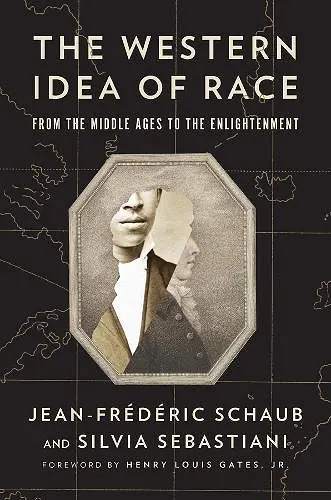
Two eminent historians offer a groundbreaking study of the origins of race in early modern Western Europe, tracing its development through Enlightenment justifications of global hierarchy and colonization.
Race is often thought of as an invention of the eighteenth century. In this ambitious book, the first to provide a complete origin story of race, Jean-Frédéric Schaub and Silvia Sebastiani trouble that notion, tracing the concept of race back to the roots of the Renaissance and following its evolution in succeeding centuries. Crucially, they show how race, racialization, and antisemitism developed alongside—rather than despite—the political and scientific advances of the period. Major Enlightenment thinkers advanced universalism while also taking part in debates about human origins, miscegenation, and the genealogy of race, at once advocating for equality and dividing human beings into rigid hierarchies.
Beginning with early modern conceptions of “blood purity” among nobles, Schaub and Sebastiani reveal how supposed impurity developed into an elaborate system of classification that justified notions of racial superiority. Initially, impurity was exemplified by Jewish and Muslim conversos in Iberia; later, impurity became a trait associated with New World populations of mixed Spanish, African, and Indigenous ancestry. Examining the creation of racial markers, Schaub and Sebastiani demonstrate how emerging demarcations and structures of belonging were implemented across empires, often with ambiguity or contradictions.
Covering more than three hundred years of transatlantic history and drawing on diverse sources, including scientific papers, artworks, and philosophical treatises, The Western Idea of Race is a revelatory account. It lays bare one of the key foundations of modern social inequality.
The Western Idea of Race offers a much-needed long-term historical perspective on the centrality of racial categories and practices to colonialism. It overturns historical erasures and simplifications, convincingly arguing that we cannot understand racialization without studying how it was reconfigured in the wake of 1492 and again during the Enlightenment. -- Catherine Hall, author of Lucky Valley: Edward Long and the History of Racial Capitalism
The Western Idea of Race is a watershed book. Exhuming long-lost theories of bloodlines, religious controversies, and forgotten debates in natural history, Schaub and Sebastiani reveal how ideas of human difference took shape over the course of four centuries. The result is a new and compelling history that should be on the bookshelf of anyone interested in the origins of modern racial thought. -- Andrew S. Curran, author of Biography of a Dangerous Idea: A New History of Race from Louis XIV to Thomas Jefferson
This is a book that will serve as both an indispensable reference and a key intervention in a critical historical debate. Schaub and Sebastiani, drawing on a vast source base, have written a clear and authoritative history of the origins of modern racial ideas. Casting these ideas as an instrument of domination rather than a coherent system, they take the story from late medieval Iberia to the Enlightenment and the height of the early modern slave trade, demonstrating the deep connections between the two. -- David A. Bell, author of Napoleon: A Concise Biography
Startling in its erudition, this is not a simple history of race and racism in the modern era. Schaub and Sebastiani set out to understand how Western Europe and its empires built differences between social groups upon a supposedly natural foundation, according to racial categories. -- Libération
A galvanizing essay...Here the authors study the polysemic origins of race as a ‘political resource’ by showing how it became a power struggle from the end of the Middle Ages to the Enlightenment, well beyond simply the stigmatization of skin color and alterity. -- Le Monde
The ambition of writing a complete history of race at the intersection of intellectual and social history, the rigor of its scholarship, and the innovative chronology make the work an essential contribution to French studies of race. Reading it can only shed light on the complexities of a problem that continues to haunt our societies today. -- L’Histoire
ISBN: 9780674300828
Dimensions: unknown
Weight: unknown
496 pages