Enemies and Familiars
Slavery and Mastery in Fifteenth-Century Valencia
Format:Hardback
Publisher:Cornell University Press
Published:15th May '09
Currently unavailable, and unfortunately no date known when it will be back
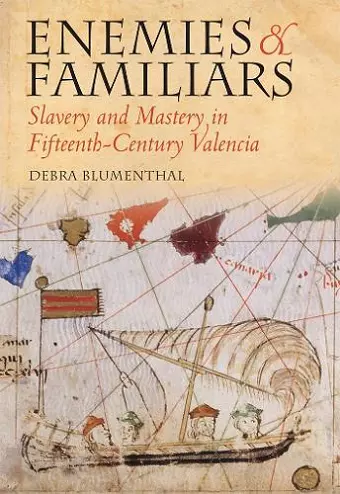
A prominent Mediterranean port located near Islamic territories, the city of Valencia in the late fifteenth century boasted a slave population of pronounced religious and ethnic diversity: captive Moors and penally enslaved Mudejars, Greeks, Tartars, Russians, Circassians, and a growing population of black Africans. By the end of the fifteenth century, black Africans comprised as much as 40 percent of the slave population of Valencia.
Whereas previous historians of medieval slavery have focused their efforts on defining the legal status of slaves, documenting the vagaries of the Mediterranean slave trade, or examining slavery within the context of Muslim-Christian relations, Debra Blumenthal explores the social and human dimensions of slavery in this religiously and ethnically pluralistic society. Enemies and Familiars traces the varied experiences of Muslim, Eastern, and black African slaves from capture to freedom. After describing how men, women, and children were enslaved and brought to the Valencian marketplace, this book examines the substance of slaves' daily lives: how they were sold and who bought them; the positions ascribed to them within the household hierarchy; the sorts of labor they performed; and the ways in which some reclaimed their freedom. Scrutinizing a wide array of archival sources (including wills, contracts, as well as hundreds of civil and criminal court cases), Blumenthal investigates what it meant to be a slave and what it meant to be a master at a critical moment of transition.
Arguing that the dynamics of the master-slave relationship both reflected and determined contemporary opinions regarding religious, ethnic, and gender differences, Blumenthal's close study of the day-to-day interactions between masters and their slaves not only reveals that slavery played a central role in identity formation in late medieval Iberia but also offers clues to the development of "racialized" slavery in the early modern Atlantic world.
Blumenthal offer a highly detailed reconstruction of slave experience at a crucial time and place: fifteenth-century Valencia.... This clearly organized and well-written book opens with a close look at how persons became enslaved.... The bulk of the book is devoted to the social and economic dimensions of slave life: the sorts of work sales engaged in, their activities and roles with their masters' households—including the sexual exploitation of women—and the limited but very real means by which they could hope to obtain and retain their freedom.... [It is] a singularly vivid reconstruction of the rhythms of everyday life at the lower levels of a late medieval city.
- James S. Amelang (American Historical Rev- Winner of Winner of the 2010 Premio Del Rey given by the Ame.
ISBN: 9780801445026
Dimensions: 238mm x 168mm x 25mm
Weight: 907g
328 pages