Birth, Death, and Motherhood in Classical Greece
Format:Paperback
Publisher:Johns Hopkins University Press
Published:18th Jan '05
Currently unavailable, and unfortunately no date known when it will be back
Nancy Demand has constructed a richer, more nuanced, and very likely far more accurate picture of childbirth and its attendant dangers than we have had to date. Her collection of translations of the Hippocratic texts on childbirth and related issues will be of great value for future investigators. -- Valerie French, American University
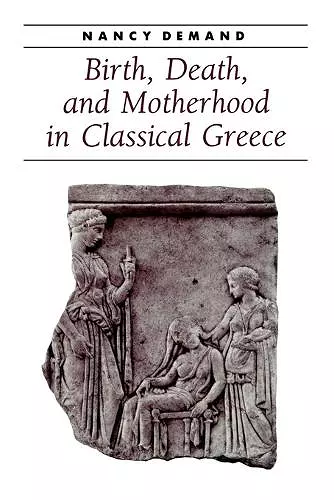
She draws relevant details from cure records and dedications from healing sanctuaries, labor scenes depicted on tombstones, Aristophanic comedy, andPlatonic philosophy.Why did Greek society foster social conditions, especially early marriage with its attendant early childbearing, that were known to be dangerous for both mother and child? What were the actual causes of death among women described as dying of childbirth in the Hippocratic Epidemics? Why did families choose to portray labor scenes on tombstones when the Greek commemorative tradition otherwise avoided reference to suffering and illness? In Birth, Death, and Motherhood in Classical Greece, Nancy Demand offers the first comprehensive exploration of the social and cultural construction of childbirth in ancient Greece. Reading the ancient evidence in light of feminist theory, the Foucauldian notion of discursively constituted objects, medical anthropology, and anthropological studies of the modern Greek village, Demand discusses topics that include midwifery, abortion, attitudes of doctors toward women patients, and the treatment of women generally. For evidence, she relies primarily on the case histories in the Epidemics concerning women with complications in pregnancy, abortion, and childbirth. She also draws relevant details from cure records and dedications from healing sanctuaries, labor scenes depicted on tombstones, Aristophanic comedy, andPlatonic philosophy.
Demand's book brings welcome light to the problems that pregnant women are likely to have faced in Greek antiquity, and to the ways in which a male-dominated society sought to understand and manage women's necessary role in procreation. Classical Review There is much here to provoke thought and not least because the author believes that male control of female reproductivity was woven inextricably into the institutions of the polis. Greece and Rome A wide-ranging and general account, using written and visual evidence to focus, above all, on women as child-bearers, brought up and socialized through rituals to bear children for the family and the state, in patterns of early and frequent childbirth which were, contradictorily, damaging to their and their children's health or survival. -- Nick Fisher Times Literary Supplement
ISBN: 9780801880537
Dimensions: unknown
Weight: 476g
304 pages