Manhood Lost
Fallen Drunkards and Redeeming Women in the Nineteenth-Century United States
Format:Paperback
Publisher:Johns Hopkins University Press
Published:11th Aug '09
Currently unavailable, and unfortunately no date known when it will be back
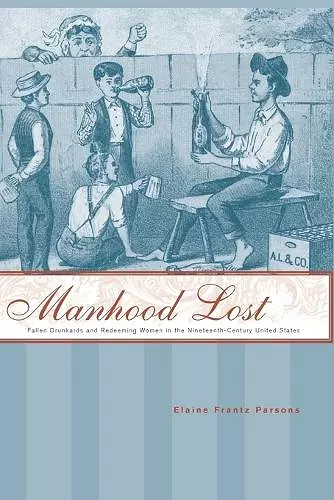
Elaine Frantz Parsons brings enormous freshness to a topic-American temperance and anti-temperance debates-about which we thought we knew a great deal. Her research encompasses the ways in which class, race, gender, religion, reform, legal discourse, and scientific knowledge shaped understandings of alcohol, efforts to control or eliminate it, and its symbolic uses. Thanks to her skill in simultaneously reading texts deeply and in locating them within social structures, she found far more complexity, ambiguity, and diversity in anti-alcohol arguments than previous scholars perceived. Her book gives far richer understanding of what was at stake in post-Civil War debates over alcohol, linking the concerns of both proponents and opponents of temperance to larger social and cultural forces in late nineteenth-century America. -- Ronald G. Walters, The Johns Hopkins University
Entering a distinctively male space-the saloon-to rescue fathers, brothers, and sons, women at the same time began to enter another male bastion-politics-again justifying their transgression in terms of rescuing the nation's manhood.In fiction, drama, poems, and pamphlets, nineteenth-century reformers told the familiar tale of the decent young man who fell victim to demon rum: Robbed of his manhood by his first drink, he slid inevitably into an abyss of despair and depravity. In its discounting of the importance of free will, argues Elaine Frantz Parsons, this story led to increased emphasis on environmental influences as root causes of drunkenness, poverty, and moral corruption-thus inadvertently opening the door to state intervention in the form of Prohibition. Parsons also identifies the emergence of a complementary narrative of "female invasion"-womanhood as a moral force powerful enough to sway choice. As did many social reformers, women temperance advocates capitalized on notions of feminine virtue and domestic responsibilities to create a public role for themselves. Entering a distinctively male space-the saloon-to rescue fathers, brothers, and sons, women at the same time began to enter another male bastion-politics-again justifying their transgression in terms of rescuing the nation's manhood.
A lively and sophisticated intellectual history... Manhood Lost furnishes new evidence for the centrality of the drink debate to nineteenth-century culture. Journal of American History 2004 Manhood Lost deserves a wide readership among historians of gender, temperance, and the nineteenth-century United States. -- Scott C. Martin Journal of the Early Republic Parsons makes a convincing argument for a much closer connection between discourses of women's rights and temperance in the nineteenth century. -- Thomas Winter Journal of Social History 2004 A fresh perspective on the ways in which nineteenth-century participants in America's temperance debate understood the roles of men and women and the relationships between individuals and their environment. -- Michelle M. Morgan History of Education Quarterly 2004 Its findings will be embraced enthusiastically by scholars affiliated with the emergent field of alcohol and addiction studies. -- John W. Crowley American Historical Review 2004 A provocative, fascinating, and elegant book. -- David M. Fahey Historian 2006 Parsons offers a fresh perspective on one of the more turgid chapters in American history: the temperance movement of the 19th century. She identifies a pervasive genre-the so-called 'drunkard narrative'-and uses it to uncover strains in how contemporaries thought about free will, individual responsibility and sexual inversion. -- Jessica Warner Addiction 2004 An intriguing, well written, and thought-provoking study that deserves a wide audience among American cultural historians. -- Laura R. Prieto American Nineteenth Century History 2004
ISBN: 9780801892561
Dimensions: 229mm x 152mm x 14mm
Weight: 318g
256 pages