But There Was No Peace
The Role of Violence in the Politics of Reconstruction
Format:Paperback
Publisher:University of Georgia Press
Published:1st Oct '07
Currently unavailable, and unfortunately no date known when it will be back
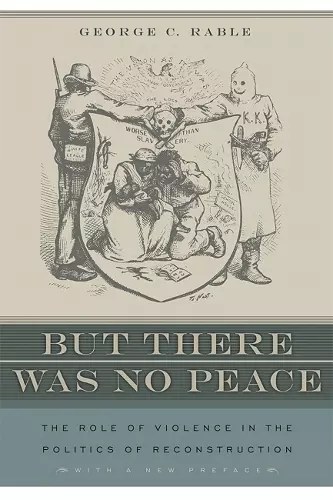
This is a comprehensive examination of the use of violence by conservative southerners in the post-Civil War South to subvert Federal Reconstruction policies, overthrow Republican state governments, restore Democratic power, and reestablish white racial hegemony. Historians have often stressed the limited and even conservative nature of Federal policy in the Reconstruction South. However, George C. Rable argues, white southerners saw the intent and the results of that policy as revolutionary. Violence therefore became a counterrevolutionary instrument, placing the South in a pattern familiar to students of world revolution.
Compelling and comprehensive . . . Shows Reconstruction to have been bloodier and deadlier than many would like to concede.
An imaginative, well-written book . . . Correctly identifies conservative white resistance to Reconstruction as a counterrevolutionary movement willing to use any means necessary to eliminate Republican conrol of state and local government.
Rable has done a prodigious amount of digging in the sources. . . . A useful guide to the grimmer side of Reconstruction history.
Brings to us the simple and terrible reminder that there was no peace for blacks and their white supporters in Dixie . . . A well-written monograph that clarifies both the successes and failures of Reconstruction.
ISBN: 9780820330112
Dimensions: 229mm x 152mm x 15mm
Weight: 454g
272 pages