Teresa Benguela and Felipa Crioula Were Pregnant
Motherhood and Slavery in Nineteenth-Century Rio de Janeiro
Lorena Féres da Silva Telles author Anthony Doyle translator
Format:Paperback
Publisher:University of Georgia Press
Published:1st May '26
£34.95
Supplier delay - available to order, but may take longer than usual.
This paperback is available in another edition too:
- Hardback£135.95(9780820367576)
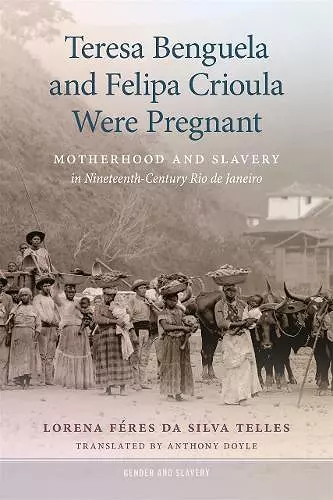
A look over the shoulders of enslaved women who navigated reproduction and motherhood in Rio de Janeiro during the nineteenth century
Teresa Benguela and Felipa Crioula Were Pregnant examines the experiences of motherhood for enslaved African women and their descendants who navigated the realities of reproduction in nineteenth-century Rio de Janeiro.
Teresa Benguela and Felipa Crioula Were Pregnant examines the experiences of motherhood for enslaved African women and their descendants who navigated the realities of reproduction in nineteenth-century Rio de Janeiro. Drawing on an extensive array of historical sources—including doctoral theses from the Faculty of Medicine of Rio de Janeiro, clinical case studies, manuals and treatises on popular medicine, commercial and runaway advertisements, baptismal records, and works by naturalists and ethnographers who traveled to Central and West Africa, as well as travel literature, fiction, memoirs, and a collection of watercolors and photographs—Telles illuminates the experiences of sexual autonomy, sexual violence, pregnancy, labor, breastfeeding, and the care of enslaved and freed babies in Rio de Janeiro between 1830 and 1888. Teresa Benguela and Felipa Crioula Were Pregnant also details the sorrows and hopes of these enslaved women and illuminates their escapes, strategies of resistance and survival, and the social networks they built to cope with the harsh realities and limitations that slavery imposed on motherhood in nineteenth-century Rio de Janeiro.
Lorena Féres da Silva Telles’s study of pregnancy and infant care in the last years of slavery in Rio de Janeiro will be welcomed by everyone interested in the history of slavery across the Atlantic world. With sensitivity to the lives of individual enslaved women and careful attention to the thought and practice of medical professionals, Telles shows the importance of pregnancy and maternity to the crisis in slavery in Brazil.
-- Diana Paton * author of No Bond but the Law: Punishment, Race, and Gender in Jamaican State Formation, 1780-1870 *Extensively researched, compellingly written, and fluidly translated, Teresa Benguela and Felipa Crioula Were Pregnant sheds unflinching light on the violence and exploitation that Rio de Janeiro's enslaved women endured in pregnancy, birth, and motherhood. This book will open your eyes and break your heart.
-- Camillia Cowling * author of Conceiving Freedom: Women of Color, Gender, and the Abolition of Slavery in Havana and Rio de Janeiro *By centering enslaved women’s reproductive lives and struggles with great care and empathy in its telling of the past, this book stands as the foundational text of the history of enslaved women’s reproductive experiences in Brazil. Da Silva Telles's careful attention to the lived histories of enslaved women of various ethnicities and birth locations serves as a powerful and important model for scholars working on embodied histories of reproduction in slave societies across the Atlantic world.
-- Cassia Roth * author of A Miscarriage of Justice: Women’s Reproductive Lives and the Law in Early Twentieth-Century BrazISBN: 9780820375687
Dimensions: unknown
Weight: unknown
398 pages