Pittsburgh Rising
From Frontier Town to Steel City, 1750-1920
Edward K Muller author Rob Ruck author
Format:Paperback
Publisher:University of Pittsburgh Press
Published:31st May '25
£17.95
Available to order, but very limited on stock - if we have issues obtaining a copy, we will let you know.
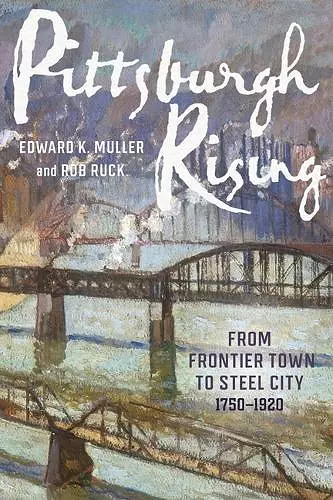
Traces the Arc of Pittsburgh’s Rise from Frontier Outpost to Dynamic Industrial Region
Pittsburgh Rising traces the lives of individuals and families who lived and worked in this early industrial city, jammed into unhealthy housing in overcrowded neighborhoods near the mills.Over 170 years, Pittsburgh rose from remote outpost to industrial powerhouse. With the formation of the United States, the frontier town located at the confluence of three rivers grew into the linchpin for trade and migration between established eastern cities and the growing settlements of the Ohio Valley. Resources, geography, innovation, and personalities led to successful glass, iron, and eventually steel operations. As Pittsburgh blossomed into one of the largest cities in the country and became a center of industry, it generated great wealth for industrial and banking leaders. But immigrants and African American migrants, who labored under insecure, poorly paid, and dangerous conditions, did not share in the rewards of growth. Pittsburgh Rising traces the lives of individuals and families who lived and worked in this early industrial city, jammed into unhealthy housing in overcrowded neighborhoods near the mills. Although workers organized labor unions to improve conditions and charitable groups and reform organizations, often helmed by women, mitigated some of the deplorable conditions, authors Muller and Ruck show that divides along class, religious, ethnic, and racial lines weakened the efforts to improve the inequalities of early twentieth-century Pittsburgh—and persist today.
Written in clear prose Pittsburgh Rising tells the gripping story of Pittsburgh’s many economic reinventions as it become an industrial powerhouse, as well as the social transformations that accompanied these changes.
* CHOICE *Muller and Ruck present a deep, nuanced portrait of our city.
* Pittsburgh Magazine *In the tradition of David McCollough, the authors display the rare gift of making academic knowledge accessible.
* The Pennsylvania Geographer *Muller and Ruck do a fantastic job of giving a sense of what the actual conditions were like in the iron forges, steel mills, and glass workshops of Pittsburgh. The day-to-day specifics of labor are conveyed with ease and accessibility. They extend this focus to the capital class as well, explaining the economics and technology that altered industrial production, as well as the personalities of men like Carnegie, Frick, Westinghouse, and Heinz, who changed the city forever. In addition to that familiar story, they add nuance to the narrative of immigration to Pittsburgh, both from Europe and in the form of Black migration from the South, by emphasizing the ways in which regionalism from country of origin effected the American experience of different groups.
-- Ed Simon, author of An Alternative History of PittsburghIn its first 150 years, Pittsburgh was a place shaped by geography, natural resources, immigration, class and ethnic identity, and the quest for power and profit. This is a history of the people who fashioned lives in Pittsburgh and the material and social structures in which they lived those lives. Muller and Ruck offer a masterful sense of cause and effect, leading the reader into a sense of change over time. They present the messy limitations and possibilities of Pittsburghers’ lives.
-- Edward Slavishak, Susquehanna UniversityMuller and Ruck detail how tycoons like Carnegie, Frick, and Mellon built their empires, even as they emphasize the brutal exploitation of the largely immigrant workforce that made those fortunes possible—and the ethnic social clubs and other organizations that helped those workers and their families survive. Still, the authors pay heed to underrepresented aspects of local history.
-- 90.5ISBN: 9780822967323
Dimensions: unknown
Weight: unknown
296 pages