Atlantic Unbound
Architecture in the World of the Haitian Revolution
Format:Paperback
Publisher:University of Pittsburgh Press
Publishing:1st Dec '26
£28.95
This title is due to be published on 1st December, and will be despatched as soon as possible.
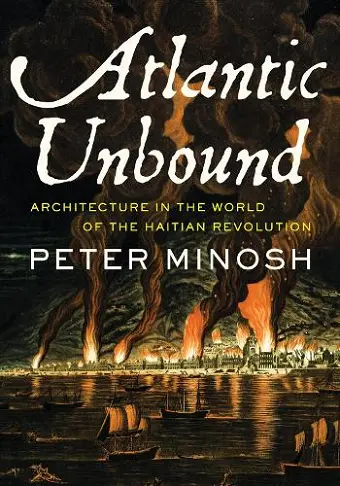
Reframes Neoclassical Architecture through Revolution, Empire, and Transnational Exchange
In Atlantic Unbound, Peter Minosh examines neoclassical architecture within the Atlantic World—a site of colonialism, resource extraction, commodity circulation, capital, and slavery spanning Europe, North America, and the Caribbean in the eighteenth and nineteenth centuries.
In Atlantic Unbound, Peter Minosh examines neoclassical architecture within the Atlantic World—a site of colonialism, resource extraction, commodity circulation, capital, and slavery spanning Europe, North America, and the Caribbean in the eighteenth and nineteenth centuries. Minosh focuses on France during the expansion of its colonial empire and the French Revolution, Saint-Domingue during and after the Haitian Revolution, and the United States in the decade following the ratification of the Constitution. By analyzing architecture’s relationship to revolutionary politics, colonial practices, and Enlightenment discourse, this book reveals buildings, cities, and landscapes as products of transnational exchange and cross-cultural interaction that shaped the modern world. By positioning neoclassical architecture within colonialism and slavery and rethinking its role in Atlantic revolutions, Atlantic Unbound reorients neoclassicism as a globalized modernity—a negotiation of global systems and hybrid sovereignties.
Atlantic Unbound is a remarkable book with a number of singular achievements. Using Haiti as a hub around which Caribbean, North American, and European cultural and political developments can be arrayed and analyzed is logical, innovative, and entirely necessary. The specific figures who are brought into the spotlight, along with their architectural endeavors, powerfully illuminate these Atlantic World places and the connections between them. Every single chapter is enlivened with unique and powerful insights, at times pulled from archives and at times drawn from the visual analysis of buildings, their remains, and/or their representations.
-- Nathaniel Robert Walker, Catholic University of AmericaAtlantic Unbound powerfully reframes neoclassical architecture, showing how it both embodies and exposes the many contradictions at the heart of Enlightenment. Peter Minosh’s illuminating case studies, all haunted in different ways by the Haitian Revolution, slowly unravel myths of universal harmony, sovereignty, and reason to reveal their structural dependence on the violent repressions of race and enslavement.
-- Meredith Martin, New York UniversityAsking readers to critically reexamine relationships between modernity, democracy, politics, race, and architecture, Atlantic Unbound is an important contribution to architectural history. It invites a rethinking not only of the temporal period under study, but also how we understand subsequent architecture of the nineteenth, twentieth, and twenty-first centuries. Indeed, this book will inspire a much-needed revaluation of canonical buildings as well as bring attention to understudied structures.
-- Erica Morawski, Pratt InstiISBN: 9780822968269
Dimensions: unknown
Weight: unknown
232 pages