Medieval Riverscapes
Environment and Memory in Northwest Europe, c. 300–1100
Format:Paperback
Publisher:Cambridge University Press
Published:7th Aug '25
Currently unavailable, and unfortunately no date known when it will be back
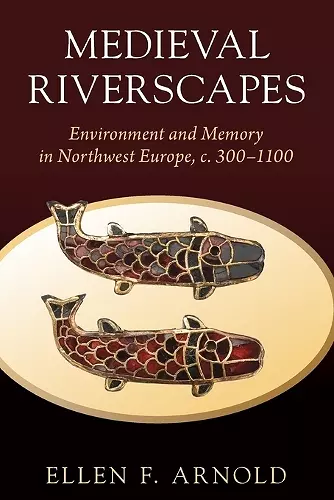
Focusing on storytelling across centuries, Arnold explores how rivers were imagined c. 300-1100 and reveals a rich, complex medieval world.
In this expansive history Ellen F. Arnold uses saints' lives and miracle stories, poetry, charters, chronicles, and historical narratives to examine how rivers were imagined and ascribed meaning c. 300–1100 CE. Focusing on storytelling across centuries, she explores how environmental experiences were incorporated into pre-modern cultural spaces.Fishermen, monks, saints, and dragons met in medieval riverscapes; their interactions reveal a rich and complex world. Using religious narrative sources to evaluate the environmental mentalities of medieval communities, Ellen F. Arnold explores the cultural meanings applied to rivers over a broad span of time, ca. 300-1100 CE. Hagiographical material, poetry, charters, chronicles, and historiographical works are explored to examine the medieval environmental imaginations about rivers, and how storytelling and memory are connected to lived experiences in riverscapes. She argues that rivers provided unique opportunities for medieval communities to understand and respond to ecological and socio-cultural transformations, and to connect their ideas about the shared religious past to hopes about the future.
'As observers from Heraclitus to today's flood managers know, rivers define the lands they flow through. In Ellen Arnold's compelling narrative, 'riverscapes' reveal key environmental and cultural features of late antique and medieval Europe. Showing how river histories provide keys to future resilience, her book brings medieval environmental history into contemporary debates.' Steve Mentz, Professor of English, St. John's University, New York City, author of Ocean and An Introduction to the Blue Humanities
'There's no 'water under the bridge' in Ellen Arnold's new book, which shows how pre-modern writers preserved past flows into the present. Arnold opens a window for her readers onto both early medieval words and waters, illuminating northwestern Europe's literary cultures, and their deep engagement with rivers.' Paolo Squatriti, University of Michigan
'This admirable book immersed me totally into the real and imagined rivers and riverscapes of the Early Middle Ages. Arnold shows with tremendous skill and wonderful original texts how authors used the rivers and riverscapes as vehicles for literary, religious, and political messages; and how movement and transparency of rivers and their often blurred boundaries not only shaped human interaction but encouraged contemplation about change and transition, connections of spaces, and entanglement of past and present.' Petra J. E. M. van Dam, VU University, Amsterdam
'A deeply researched and thoroughly absorbing study of medieval riverscapes.' Lori Jones, H-Water
'… this book successfully addresses what the author argues is a lack of ecocriticism regarding medieval Latin texts - poems, letters, saints' vitae, bestiaries, charters, chronicles, and annals. … Recommended.' R. T. Ingoglia, CHOICE
'A deeply researched and thoroughly absorbing study of medieval riverscapes … The importance of riverscapes to medieval imaginations, senses of identity, and day-to-day lives sing loudly throughout this book, and they offer a song that medievalists, environmental historians, and natural world enthusiasts should all hear.' Lori Jones, H-Net
'Arnold has given us a beautiful reflection on the fluidity of riverscapes over time, space, and cultures in the earlier half of the Middle Ages. Her succinct and honest reflections on her own experience with these riverscapes is an excellent exercise in historical empathy and a demonstration of how riverscapes continue to hold the echoes of the past into the here and now.' Marie Christine Garcia, Comitatus
'… ambitious and impressive in its depth as well as its breadth … Arnold shows how the unique qualities of flowing water facilitated contemplation on the nature of history and community identity in early medieval Europe. … The waters of rivers mirror society today and remain important cultural lenses through which to view the Anthropocene.' Carolyn Twomey, H-Environment
ISBN: 9781009299411
Dimensions: unknown
Weight: unknown
326 pages