Constructing the Achievement State
Cultural Administration in Postrevolutionary Egypt
Format:Paperback
Publisher:Cambridge University Press
Published:9th Apr '26
Currently unavailable, and unfortunately no date known when it will be back
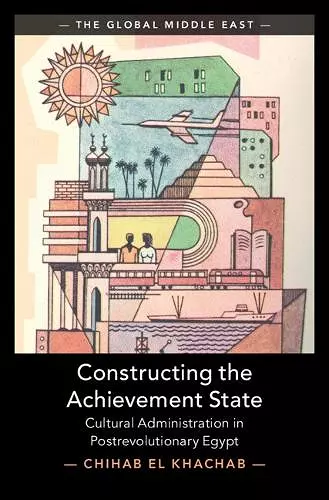
Explores how the Egyptian state became an ideological project promoted by national cultural institutions after the 1952 revolution.
After the 1952 revolution, the Egyptian state became an ideological project promoted by national cultural and media institutions. Using official written and visual sources produced by governmental departments, Chihab El Khachab shows how low- and mid-ranking bureaucrats represented and embodied the Egyptian state through a praxis of 'achievement'.After the 1952 revolution, the Egyptian state became an ideological project promoted by national cultural and media institutions. Focusing particularly on the years under the leadership of Gamal Abdel Nasser (1954–1970), Chihab El Khachab uses official written and visual sources produced by different governmental departments to show how low- and mid-ranking bureaucrats represented and embodied the Egyptian state through a praxis of 'achievement' (ingāz, pl. ingazāt). This study demonstrates how a successful anti-colonial nationalist movement built its own state apparatus. El Khachab argues that the state's 'achievements' are neither the tangible outcome of governmental work nor the self-evident metrics needed to evaluate national progress, but an ideological category deployed by bureaucrats. Conceiving achievements in this way allows us to understand how everyday bureaucratic work represents and embodies 'the state', and why this idea remains an important force in contemporary Egypt.
ISBN: 9781009769617
Dimensions: unknown
Weight: 457g
314 pages