Architecture as a Frail, Literary Object
Neurasthenia and the Works of Geoffrey Scott and Bernard Berenson
Format:Hardback
Publisher:Taylor & Francis Ltd
Published:6th Apr '26
Currently unavailable, and unfortunately no date known when it will be back
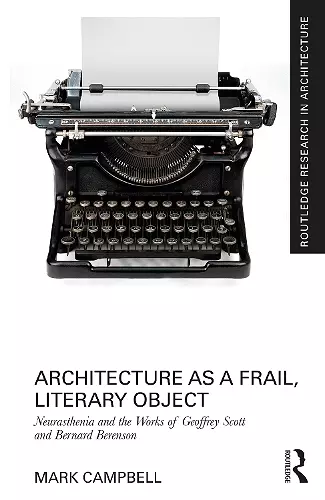
This book considers the motives, ambitions, and malaprops of writing architectural history during the early-1900s – a moment that coincided with the emergence of modernity. In reference to a series of eccentric Anglo-American cultural figures, it considers the relationships between architecture, human perception, disease, and frailty to provide original ideas regarding the writing of architectural history and the literary construction of architecture.
Architecture is not typically associated with frailty. Indeed, one of the founding principles of architecture is that it should aspire to be stable, resilient and indefatigable. In addition, architecture is also not typically thought of in terms of its literariness. Tracing this contradictoriness, this book considers architecture as a frail, literary object by examining the eccentric architectural criticism of Geoffrey Scott, author of The Architecture of Humanism (1914), together with the opportunistic connoisseurship of Bernard Berenson, the leading authority on the attribution of Italian Renaissance painting. Through a reading of their works, it interprets architecture as both “frail,” when viewed through the diffracted lens of nervous illness, and a form of “writing,” in which architecture assumes concrete form through literary description.
This book will be of interest to academics, students, and researchers in architecture and architectural history.
ISBN: 9781032381886
Dimensions: unknown
Weight: 590g
234 pages