An Introduction to Veterinary Humanities
Carol Gray editor Alison Skipper editor Ruth Serlin editor
Format:Paperback
Publisher:Taylor & Francis Ltd
Published:14th Apr '26
Should be back in stock very soon
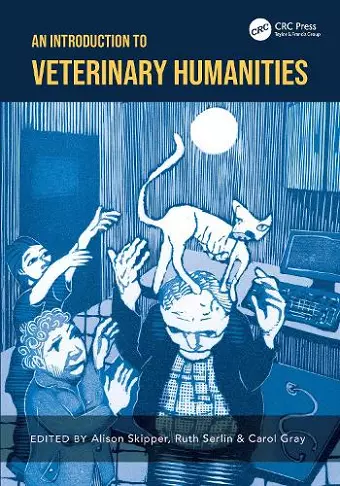
Although veterinary professionals can now provide technologically sophisticated medical care for animals, every day they ask themselves questions that lie outside the realm of science. How do I overcome my dread of this hostile client? How can I protect myself from moral stress? What level of intervention is ethically appropriate for this patient? What does professionalism mean for me? While the work can be immensely rewarding, the veterinary sector can be very challenging. It is a world where clinical care is influenced and professionalism affected by multiple factors relating to colleagues, patients, animal caregivers and wider societal contexts. We deal every day with human problems that science alone can’t solve.
This book offers new ways to think about these issues through the emerging interdisciplinary field of veterinary humanities. It breaks new ground in bringing together insights from multiple academic perspectives – history, art, ethics, social sciences and many more – to think about veterinary topics in a new way through contributions from more than forty authors. Some are veterinary professionals with expertise in humanities and social science, others explore the veterinary world from a primary background in the humanities and social sciences. Addressing topics from across the veterinary sector, their writing ranges from deeply personal reflections to academic essays.
FEATURES
● 32 chapters by different authors with veterinary and/or humanities expertise
● Linking sections that relate these contributions to overarching themes
● UK-based scholarship with wider relevance
● Structured to stimulate reflection and discussion, in university, in the workplace or anywhere people consider what it means to be involved in the veterinary world.
This anthology will be particularly relevant to those training or working in the veterinary sector, whatever your role or level of experience. Other readers who are interested in animal welfare and human-animal relationships will also find it accessible, because the book assumes no clinical knowledge and offers no clinical guidance. It’s a book about being human and working with animals, intended to help you think about what that means for you.
“The first book in a new field represents a significant step. An agenda begins to take shape. Whether you read this book from cover to cover or dip in and out, you will find much food for thought in the collection of essays. Please tell people about them. It is time to extend the conversation.”
Andrew Gardiner, Professor of Veterinary Medical Humanities, Royal (Dick) School of Veterinary Studies, University of Edinburgh, UK
“Recent decades have seen huge advances in the Science of veterinary medicine, with increasing prioritisation of ‘disease’ as the focus of the care delivered, supported by extensive diagnostics, treatment and adherence to evidence-directed protocols. This new book builds on these advances and rebalances the Art of veterinary medicine by re-emphasising the value of considering and integrating relevant perspectives of the animal, humans and environment within which the disease sits into a more holistic clinical management process. Taking this approach, the book acknowledges that suffering exists at the level of the animal and caregivers rather than at the level of the disease, and therefore that a contextualised care paradigm offers the most satisfying care experience for these animals and caregivers (owners and veterinary professionals alike).
This book offers readers a portal to the magical and fascinating world of veterinary humanities where every clinical case becomes a unique entity constructed by the context at that moment in time. And where veterinary professionals can rediscover clinical freedom, professionalism and the joy of working with humans as well as the animals in everyday veterinary practice.”
Dan O’Neill, Professor of Companion Animal Epidemiology at the Royal Veterinary College (RVC), UK
"This compelling, accessible collection provides strong evidence that the field of veterinary humanities belongs at the center of the veterinary profession. The crises that face veterinary professionals today are ethical, and involve complicated intersections of human and animal lives that cannot be solved by a narrow reliance on science and technology. Instead, this book points us in the direction of understanding that we need to move towards conversations focused on fundamental questions about who we are as humans, what kind of relationships with desire with other humans and animals, and how we want to live together in this world. Through a wide ranging collection incorporating essays about why and how to incorporate arts and humanities in veterinary education and the veterinary profession, personal reflection, clinical decision-making, the concept of care in veterinary medicine, and professional identity, the authors propel us towards both imagining and creating a more humane veterinary profession, for veterinarians, human clients, and animal patients."
Nadine Dolby, Professor, Purdue University. Author of Learning Animals: Curriculum Pedagogy, and Becoming a Veterinarian (CRC Press, 2022).
ISBN: 9781032427225
Dimensions: unknown
Weight: 740g
384 pages