Parliament and the Invention of Legislative Power
England, 1100-1330
Format:Hardback
Publisher:Taylor & Francis Ltd
Publishing:27th Nov '26
£171.99
This title is due to be published on 27th November, and will be despatched as soon as possible.
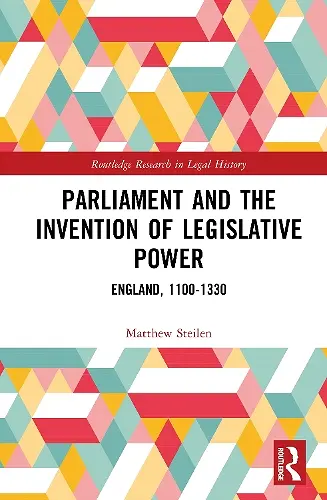
How did the English parliament become a legislature—an assembly that deliberates, makes law, and represents a nation? In this wide-ranging and carefully argued reinterpretation, Matthew Steilen retraces parliament’s emergence across the long thirteenth century, from the royal councils of the Anglo-Norman world to the appearance of a self-conscious “commons” in the 1320s.
Parliament, Steilen argues, was a social creation, assembled piece bympiece by kings, prelates, magnates, knights, and townsmen who adapted familiar practices to new ends, like the disputatious “counsel” of the cathedral schools, the proctors of the church, and the petitions that flowed into the king’s courts. Ranging from the Peace of God to Magna Carta, from Simon de Montfort’s parliaments to the statutes of Edward I, the book moves beyond old quarrels about whether early parliaments were essentially “judicial” or “political.” Instead, it offers a rich account of institutional creativity: how people, often working with different purposes and by improvisation, built one of the medieval world’s most consequential institutions.
Written for scholars and advanced students of medieval history, legal and constitutional history, the history of political thought, constitutional law, and parliamentary studies, the book will also engage readers interested in state formation and the origins of representative government. It offers them a fresh interpretation of a foundational institution, a clear synthesis of a vast and contentious historiography, and an accessible, source-based account that illuminates how legislatures come into being.
ISBN: 9781032517926
Dimensions: unknown
Weight: unknown
334 pages