Indian and South African Labour Responses to the International Labour Organization’s Green Initiatives
Through the Eyes of the Colonized
Format:Hardback
Publisher:Taylor & Francis Ltd
Published:8th Jun '26
Currently unavailable, and unfortunately no date known when it will be back
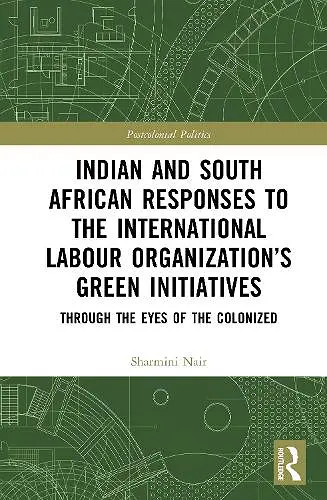
Indian and South African Labor Responses to the International Labor Organization’s Green Initiatives: Through the Eyes of the Colonized explores the differences in attitudes of developing states to the International Labor Organization (ILO) green initiatives, such as sustainable development, green jobs, and just transition, through a comparative case study of India and South Africa. As noble and urgent as they seem, not all countries are on board with green initiatives. Some developing states are wary on the grounds that they continue the interventionist legacies of their colonizers. India is one of these countries less open to these initiatives, in contrast to South Africa, which has embedded the initiatives in their green labor programs. This book shows how postcolonial theories such as Said’s Orientalism and Bhabha’s mimicry can be helpful in making sense of these discrepancies in attitudes. By providing a comparative study of these two powerful BRICS countries, it fills an important gap in our understanding of postcolonial responses of developing states, and expands the fields of comparative politics, history, postcolonial studies, and environmental policies. The book concludes by exploring the distinct ways in which India resists these green initiatives and how South Africa offers resistance by mimicking Western green initiatives in their policy line-up. Indian and South African Labor Responses to the International Labor Organization’s Green Initiatives: Through the Eyes Initiatives will be of great interest to students and scholars of Postcolonial Politics and History, and International Relations.
"Author Sharmi Nair applies the lens of post-colonial theory to explain variations in the way that organized labor in two prominent nations of the Global South, India and South Africa, responded to the International Labor Organization’s environmental policies. Drawing on concepts articulated by post-colonial writers, particularly the idea of mimicry in the work of theorist Homi Babha, Nair shows how the different organized labor responses to ILO environmental directives of a rejectionist India and accommodationist South Africa each express mimicry and a post-colonial posture resisting the ILO’s global Green Initiative guidance that still tends to treat these labor movements as subalterns in the grand project of advancing international environmental sustainability. Nair’s study provides a useful corrective to narratives and policy prescriptions that fail to adequately respect the experience and voices of previously colonized people in the quest to advance global environmental stewardship."
Stephen Mumme, Professor Emeritus, Department of Political Science, Colorado State University, Fort Collins
ISBN: 9781032973999
Dimensions: unknown
Weight: 580g
216 pages