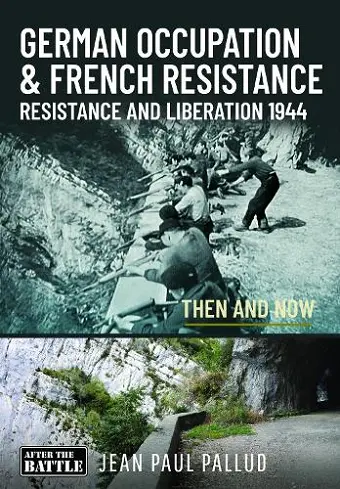
GERMAN OCCUPATION & FRENCH RESISTANCE
Resistance and Liberation 1944 Then and Now
Format:Hardback
Publisher:Pen & Sword Books Ltd
Publishing:30th Sep '26
£25.00
This title is due to be published on 30th September, and will be despatched as soon as possible.
By the beginning of 1944, the Resistance in France had reached both a measure of unity with the creation of the FFI, the French Forces of the Interior, and a substantial strength. However, only 10 per cent of these potential soldiers were armed for the Allies gave until then a lack of priority to the armament and supply of the Resistance. It was only at the end of June, after a report from Special Forces Headquarters highlighted that, provided with weapons and supplies, the resistance would play an important role in the battle in France, that a first massive airdrop operation was launched. Three mass daylight drops followed in July, August, and early September, but all of this came far too late to have any real impact on the war. The impressive increase of the Resistance actions all over France in 1943 compelled the German occupiers to switch armed forces to anti-guerrilla operations to supplement the security forces. In May 1944, some 5,000 armed FFI assembled in three strongholds in central France, Mont Mouchet being the most important, and the Germans had to launch a strong attack to disperse them. The same story applied at Saint-Marcel in Brittany in June. In June, the FFI took Tulle, a large city in central France which was the seat of a Préfecture. It was a major snub for the Vichy government as well as the German occupying forces, and a battle group of the 2. SS-Panzer-Division then on its way to the battle front in Normandy intervened, hanging 99 civilians in the streets. Following plans developed to bring chaos behind the German lines during the Allied landing in Normandy, the Resistance activities increased significantly after D-Day. The rail-cutting program was remarkably effective with hundreds of individual operations carried out. The OKW war diary reported daily on the battle against the resisters, noting 'Sabotageakte' against communications, railways and bridges, and operations against 'Banden' (gangs). Under the pretext of fighting the partisans, German units committed numerous atrocities against the civilian population. The 2. SS-Panzer-Division made its infamous name by hanging 99 men in Tulle on June 9 and murdering 642 civilians, women and children included, in Oradour-sur-Glane the next day. Reporting of the operations against 'Banden', the OKW counted all...
ISBN: 9781036156077
Dimensions: unknown
Weight: unknown
136 pages