The Guangdong Model and Taxation in China
Formation, Development, and Characteristics of China's Modern Financial System
Format:Paperback
Publisher:Taylor & Francis Ltd
Published:1st Dec '25
Currently unavailable, and unfortunately no date known when it will be back
This paperback is available in another edition too:
- Hardback£145.99(9789463729833)
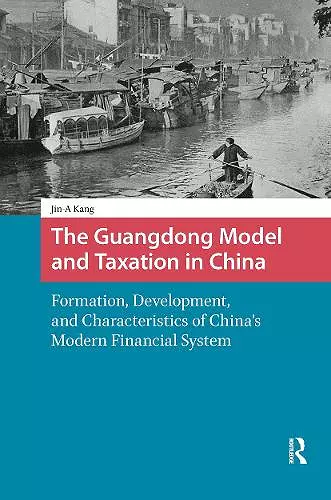
This book explores the formation, development, and characteristics of modern China's finance, focusing especially on Guangdong province as a case study to illustrate both the macro-level trends and the micro-level reality. The chronological range of this book is mainly from the late Qing period to the early Republican Era ending in 1937, when the full-scale Second Sino-Japanese War broke out. After the concept of modern finance was introduced to China for the first time in the late Qing period, the efforts to build modern finance continued in the Republican Era both nationally and locally. But this process was interrupted by the outbreak of the war against Japan in 1937 and, having been derailed, did not subsequently recover due to the subsequent civil war between the Kuomintang and the Chinese Communist Party. This interrupted process of financial modernization was resumed with Reform and Opening-up, launched in 1978. Therefore, in order to illustrate the structural transformation and persistent characteristics of China’s fiscal system, this book also includes discussions of the early Qing period and current Chinese finance.
The Guangdong Model and Taxation in China is a valuable addition to the literature on state-building in modern China. Its multi-archival and multi-lingual analysis of fiscal arrangements in Guangdong warrants attention from scholars and students interested in China's politics and economy from the late Qing to the Republican era. -Tomoko Shiroyama, The University of Tokyo, International Journal of Asian Studies , September, 2024
ISBN: 9781041188100
Dimensions: unknown
Weight: 570g
310 pages