Epitomic Writing in Late Antiquity and Beyond
Forms of Unabridged Writing
Marco Formisano editor Paolo Felice Sacchi editor
Format:Paperback
Publisher:Bloomsbury Publishing PLC
Published:18th Apr '24
Currently unavailable, and unfortunately no date known when it will be back
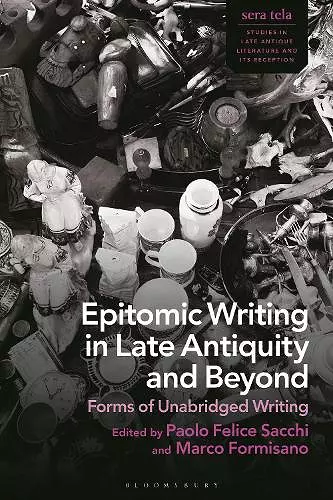
Argues for an innovative definition of “epitomic writing” useful for investigating various literary and aesthetical phenomena from Greco-Roman literature to late-20th-century authors.
This volume makes a powerful argument for epitome (combining textual dismemberment and re-composition) as a broad hermeneutic field encompassing multifarious historical, conceptual and aesthetical concerns. The contributors gather from across the globe to present case studies of the 'summing up' of cultural artefacts, literary and artistic, in epitomic writing, and as a collective they demonstrate the importance of this genre that has been largely overlooked by scholars.
The volume is divided into five sections: the first showcases the broad range of fields from which epitomic analysis can be made, from classics to postmodernism to cultural memory studies; the second focuses in on epitome as dismemberment in writing from late antiquity to the modern day; the third considers a 'productive negativity' of epitomic writings and how they are useful tools for investigating the very borders and paradoxes of language; the fourth brings this to bear on materiality; the fifth considers re-composition as a counterpart to dismemberment and problematises it.
Across the volume, examples are taken from important late antique writers such as Ausonius, Clement of Alexandria, Macrobius, Nepos, Nonius Marcellus and Symphosius, and from modern authors such as Antonin Artaud, Barthes, Nabokov and Pascal Quignard. Epitomic writings about art from decorated tabulae to sarcophagi are also included, as are epitomic images themselves in the form of manuscript illustrations that sum up their text.
ISBN: 9781350281974
Dimensions: 232mm x 154mm x 18mm
Weight: 480g
316 pages