Women, Land and Moral Justice in Late Colonial India
Peasant Voices from the Himalayas
Format:Hardback
Publisher:Bloomsbury Publishing PLC
Publishing:24th Dec '26
£85.00
This title is due to be published on 24th December, and will be despatched as soon as possible.
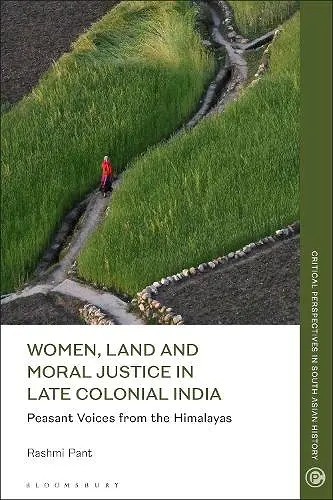
This book uncovers how peasant women in late colonial India invoked the concept of parvarish to defy male patrilineal inheritance of property and stake claims of their own.
This book, set in Kumaon and Garhwal in late colonial India, reconstructs the moral world of peasant women who transmitted ancestral property in defiance of a legal regime that only recognised patrilineal inheritance. Appealing to the concept of parvarish (‘providing for’) in Hindu law, these women invoked a moral economy and norms of obligation, reciprocity and loyalty to reconfigure their household structure and ensure care and labour in exchange for property from the late 19th century onwards.
Arguing that this historical practice clearly demonstrates non-elite women’s agency during this period, the book taps into hitherto untapped regional archival material such as gift deeds, community-brokered agreements and litigant depositions to highlight the importance of familial obligations in peasant culture. In doing so, Women, Land and Moral Justice in Late Colonial India brings together colonial, gender and legal histories to provide a story of women creating a third way, one that allowed them to reject patriarchal norms in practice, defy colonial law and reclaim control of their households.
A masterful demonstration of how women’s resistance to dwindling rights and freedoms during the colonial period was ongoing, ordinary, and often successful. The author shows how, rather than being erased economically, Indian women leveraged traditional norms and practices, as well as the colonial legal system, to secure substantial property rights. * Nita Prasad, Quinnipiac University, USA *
Rashmi Pant constructs a fascinating social and legal history of the co-construction of gender, kinship and family relations, property, and moral economy. The centrality of fluid ideas of social obligation, debt, and reciprocity in parvarish or providing and care to both men’s control and the changing agency of marginalised peasant women is significant. Women push against patrilineal inheritance through the anomalies of formal legal processes and informal arenas of adjudication and custom. The book is an important addition to the literature on the making of family and everyday life through negotiated relations and the entanglement of moral ideas, material and political state interests. * Rajni Palriwala *
ISBN: 9781350637955
Dimensions: unknown
Weight: unknown
240 pages