The Unsettling Nakba
Memory Studies, Palestinian Literature, and the Challenge of Remembering
Format:Hardback
Publisher:Bloomsbury Publishing PLC
Publishing:18th Feb '27
£85.00
This title is due to be published on 18th February, and will be despatched as soon as possible.
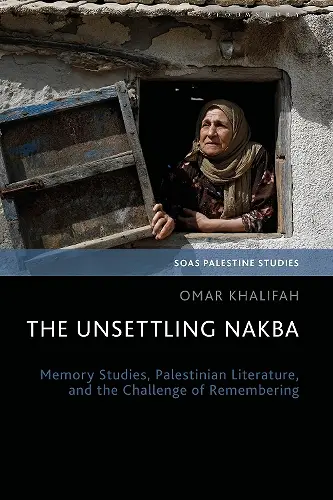
Proposes a new approach to remembering the Palestinian Nakba, with particular reference to how the Nakba is discussed in the field memory studies and in Palestinian literature.
For Palestinians, 1948 was the year of the catastrophe—the Nakba. Recently, scholars have referred to the moral and political imperative for Palestinians to remember the Nakba. However, this book argues that, in this case, remembering is fraught with distinctive and enduring problems. These challenges arise from two main particularities of the Nakba. First, the author identifies the historical and moral paradox of the Nakba occurring in the post-Holocaust era. Second, he highlights the Nakba’s unusual temporality as an ongoing and unfinished condition, rather than a closed historical event. To explore these tensions, the book focuses on the field of memory studies and on Palestinian literature, two areas where the Nakba is most often remembered and commemorated. The author presents the shortcomings of an uncritical embrace of memory studies for commemorating the Nakba, particularly noting the unparalleled centrality of the Holocaust in this field. Within the literary space, he challenges the unsubstantiated generalizations about the relationship between Palestinian literature and the Nakba. The author argues that it is only by first engaging with the distinctive challenges of remembering the Nakba that a more truthful account of the Palestinian narrative can be found.
With humility and analytical rigor, Khalifah offers a bracing and astute challenge to the
commonplace that remembering is always redemptive. With an erudite reading of both
the scholarly “regimes of memory studies” and of Palestinian literary production since
the 1980s, he shows how the weight of Holocaust remembrance continues to destroy
Palestinian lives. Attention to historical and political contexts reveals why remembering
the Nakba won’t solve the problem.
Redemption through memory of trauma has become a talismanic adage shaping modern culture and the field of Memory Studies since the Holocaust assumed the paradigm status of modern evil. But does an elegiac temporality work for the ongoing condition of Palestinians, with the processes leading to the Nakba of 1948 culminating in a genocidal war since 2023? Omar Khalifah’s revolutionary book unsettles the founding assumptions of our age to herald a Palestinian literature that is not captured by the work of mourning but driven by the struggle for freedom. * A. Dirk Moses, Professor, City College of New York, USA *
Thoughtful, incisive, and urgently needed, Omar Khalifah’s analysis of the complexities and ambivalences of Palestinian memory exposes the limits of memory studies. What use is memory when the catastrophe is ongoing? How can we adequately acknowledge Palestinian suffering when the field has been built on the exceptionalism of the Holocaust and Jewish victimization? If you are interested in how Palestinian literature helps us think about these questions with ethical clarity, read The Unsettling Nakba. * Marianne Hirsch, Professor, Columbia University, USA *
The Palestinian nakba is an unceasing, intensifying, and expanding catastrophe. Khalifah tackles challenging questions about memory, remembrance politics, justice for Palestinians, and Israel’s exploitation of Jewish suffering. An astute and probing engagement with memory studies and Palestinian literature, Khalifah’s book is an indispensable and unflinching work of critical reflection and revaluation. Essential. * Bashir Abu-Manneh, Lecturer, University of Kent, UK and Hunter College, New York,
ISBN: 9781350660182
Dimensions: unknown
Weight: unknown
272 pages