Serfdom in medieval England
Theory and practice 1200 to 1500
Format:Hardback
Publisher:Manchester University Press
Published:25th Nov '25
Should be back in stock very soon
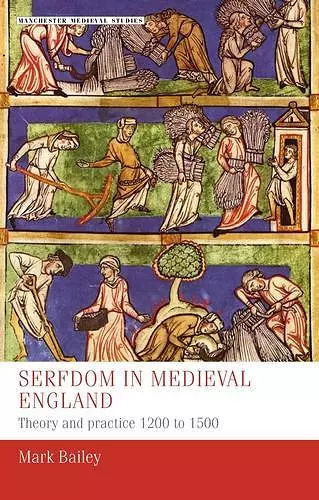
Serfdom was a coercive relationship between a landowner and peasant, which was widespread across medieval and early modern Europe. It features prominently in major historical debates, such as the origins of capitalism and the divergent pathways of western and eastern Europe to modernity. Scholars have paid particular attention to English serfdom, which is usually portrayed as highly oppressive and a major cause of the Peasants' Revolt in 1381.
This comprehensive survey draws on a vast scholarship and new research to show how, in reality, English serfdom was weak, casting new light on the nature of its society and economy when the Black Death struck in 1348-9. The pandemic now assumes a central role in the rapid decline of serfdom, as illustrated in a case study of the estate of one of England's harshest landowners, St Albans abbey.
WINNER of the Joan Thirsk Memorial Prize 2026
'A book of outstanding quality that achieves a massive advance in our knowledge and understanding of serfdom...Bailey not only provides the best available account of serfdom in the round, he also addresses and successfully resolves the fierce disputes that have raged over its character and significance from the earliest accounts to the present day...as close to a definitive history of later medieval [English] serfdom as is possible to write'.
Professor John Hatcher, University of Cambridge
'Rigorously evidenced, methodologically exemplary, and written with the authority of a senior scholar, this is a landmark study that will shape the next generation of scholarship. The result has far-reaching implications for how we understand medieval society and economy for all of England.'
Dr. Peter Larson, University of Central Florida
ISBN: 9781526172976
Dimensions: 216mm x 140mm x 25mm
Weight: 674g
456 pages