The Tobacco Takers
Puritanism, Smoking, Health, and the Archaeology of Bodily Care
Format:Hardback
Publisher:Bloomsbury Publishing PLC
Published:16th Apr '26
Should be back in stock very soon
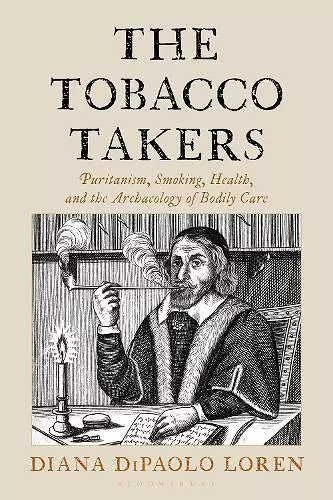
Utilizing archaeological, archival, and visual sources, this book reconsiders tobacco and smoking in the 17th-century Puritan colonies in the Atlantic Northeast through the lens of religious beliefs and medical care.
Utilizing archaeological, archival, and visual sources, this book reconsiders tobacco and smoking in the 17th-century Puritan colonies through the lens of religious beliefs and medical care.
Indigenous to the Americas and cultivated by Indigenous people for thousands of years, tobacco was introduced to Europeans in the 16th century. For Indigenous peoples in North and South America, tobacco was an important part of ceremonial life and was commonly used in healing. By the early 17th century, tobacco was found all over the globe. To keep pace with the high demand, Native American and African people labored on plantations in the Virginia colony to produce tobacco for the English world, including the Puritan colonies in the Northeast United States.
Readers may be surprised to learn that archaeological records document the popularity of smoking throughout 17th-century North America. In fact, tobacco pipes are ubiquitous in archaeological sites in the Atlantic East. While historical archaeologists have long talked about smoking in the Atlantic world, a discussion of the motivation behind early Colonial smoking is new. The assumption has been that smoking during this period was a leisure activity, but in the 17th-century Puritan world, smoking tobacco was often prescribed to alleviate numerous illnesses, as evidenced in the writings of physicians and ministers as well as pharmacopeia.
In this book, the presence of white clay tobacco pipes found in the archaeological record of Puritan colonies receives further scrutiny. For Puritans, drunkenness, excessive tobacco consumption, and conspicuous displays of prosperity were strictly forbidden. While laws in the Puritan colonies and the laws of Harvard College prohibited smoking as a form of licentious self-indulgence they did permit the medicinal use of smoking tobacco. When viewed through this lens, tobacco pipes can be viewed as an item of bodily care that addresses physical and metaphysical ailments.
In The Tobacco Takers, archaeologist Diana DiPaolo Loren uses the ubiquitous clay tobacco pipe to peel away the dusty and misunderstood layers of Puritan life. When interpreted alongside vilification by religious leaders and celebration by early practitioners of medicine, tobacco artifacts become illicit sin, health care, or both. Loren’s work is a fascinating look at the internal contradictions of Puritan life and the conflicting powers of religion and science in the 17th century. I recommend this book to every archaeologist or history lover interested in Puritans or the 17th century English world. -- Joe Bagley, City Archaeologist of Boston, USA
Diana DiPaolo Loren shines valuable light on the history and archaeology of tobacco consumption—a practice delicately balanced between healthy and immoral in the Puritan world that she investigates. The Tobacco Takers charts new ground by rethinking the materiality of tobacco usage from the vantage of bodily care. Masterful. -- Craig N. Cipolla, Associate Professor of Anthropology and Director of Archaeology, Tufts University, USA
A truly compelling analysis of healing, suffering, embodiment, and tobacco use in 17th-century Puritan New England. Loren’s thoughtful, highly-readable ‘take’ on the material culture of bodily care is made possible by a sophisticated merger of archaeology and archives. Archaeologists will never see the ubiquitous smoking pipe the same way again. -- Stephen W. Silliman, Professor of Anthropology, University of Massachusetts Boston, USA
ISBN: 9781538189344
Dimensions: 232mm x 160mm x 18mm
Weight: 440g
200 pages