“Europe” in the Middle Ages
Format:Paperback
Publisher:Arc Humanities Press
Published:30th Jun '23
Currently unavailable, and unfortunately no date known when it will be back
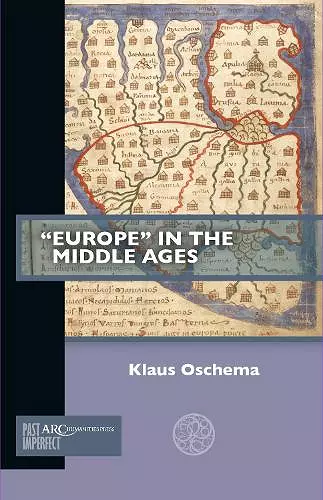
From the nineteenth century onwards, historians described the Middle Ages as the "cradle" of the nation state—then, after World War II, they increasingly identified the period as the "cradle" of Europe. A close look at the sources demonstrates that both interpretations are misleading: while "Europe" was not a rare word, its use simply does not follow modern expectations. This volume contrasts modern historians' constructions of "Europe in the Middle Ages" with a fresh analysis of the medieval sources and discourses. The results force us to recognize that medieval ideas of ordering the world differ from modern expectations, thereby inviting us to reflect upon the use and limits of history in contemporary political discourse.
Oschema (Ruhr Univ., Bochum, Germany) discusses how medieval writers, intellectuals, and societal elites frequently used the term or concept Europe and what they meant by it. He concludes that usage of this term in historical context provides no roadmap for modern conceptualization of the EU....[I]t would be anachronistic to identify Charlemagne as the "father of Europe" or to characterize his empire as European. The term in the central and late medieval period followed past usage, and the crusades and Ottoman expansion occasionally prompted an equivalence of Europe and Latin Christendom. In sum: before the early modern period, any stress on religious, political, social, and cultural characteristics played a minor role whenever Europe was mentioned.
-- R. C. Figueira * Choice Connect 61, no. 6 (February 2024): art. 61-16ISBN: 9781641891592
Dimensions: unknown
Weight: unknown
136 pages
New edition