Beowulf—A Poem
Format:Paperback
Publisher:Arc Humanities Press
Published:28th Feb '22
Currently unavailable, and unfortunately no date known when it will be back
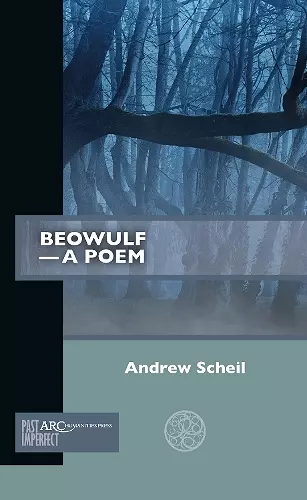
Why should anyone, aside from specialist historians and philologists, read Beowulf? This book presents a passionate literary argument for Beowulf as a searching and subtle exploration of the human presence. Seamus Heaney praised Beowulf as "a work of the greatest imaginative vitality": how is that true? The poem's current scholarly obsessions and its popular reception have obscured the fact that this untitled and anonymous 3182-line poem from Anglo-Saxon England is a powerful and enduring work of world literature. Beowulf is an early medieval exercise in humanism: it dramatizes, in varied and complex ways, the conflict between human autonomy and the "mind-forg'd manacles" of the world. The poem is as relevant and moving to any reader today as it was during the early Middle Ages. This book serves both as an invitation and introduction to the poem as well as an intervention in its current scholarly context.
Andrew Scheil’s Beowulf: A Poem is the kind of book that fans of the poem have long needed. Beyond the other specialties and disciplines that inevitably enter and overwhelm its orbit—the Vikings, linguistics, archaeology, Tolkien—Scheil wants us to value Beowulf as poetry first and foremost. Schell reminds us that if the poem is off-putting to many of us now, it was probably seen as strange even in its own time.
-- Tim Miller * Medieval World: Culture and Conflict 10 (2024): 56 *Andrew Scheil makes a passionate case for the relevance of Beowulf to modern readers. At the heart of his thesis is his claim that Beowulf is a "deeply humanist work" (p. 30), profoundly concerned with doubt, contingency, and tragedy. [...] In modern usage, ‘humanism’ often denotes a human-centric vision of the world "and a rejection of theistic religion and the supernatural in favor of secular and naturalistic views of humanity and the universe" (OED 5.b.). It is therefore difficult to reconcile Scheil’s vision of a "humanist" Beowulf with the monotheism of the poem’s narrator and characters, who consistently express their belief in a divine being (Metod) who made the world (ll. 90–98) and who rules over all throughout time (ll. 1056b–57), governing the fates of men (ll. 2525b–27a) while changing the seasons (ll. 1608b–11) and continually performing miracles (ll. 930b–31), and who will judge the righteous and the damned (ll. 180b–88). However, by zooming in on moments when these beliefs seem to falter as characters are confronted with overwhelming or surprising events, Scheil skillfully reminds us of the poem’s complexity and ambiguity.
-- Francis Leneghan * Arthuriana 33, no. 2 (Summer 2023): 189–91 *Beowulf—A Poem is a highly accessible work of literary criticism. For those familiar with Beowulf it acts as a quick but insightful perspective of some lesser considered literary qualities of the poem. For those who are yet to engage with Beowulf itself, this book prepares them for conscious and critical engagement with the poem's complex themes without the burden of trying to grapple with the complexities of its broader contextual matter. It promotes the idea of reading Beowulf not as an historical artifact but as a piece of reflective and meaningful literature, and though it may not be the book that experts in the field will repeatedly reach for, it offers an ideal point of entry and reference for newcomers and emerging students of Beowulf whether reading for research or leisure.
-- Cassandra Schilling * Journal of the Australian Early Medieval Association 18 (2022): 252-ISBN: 9781641893916
Dimensions: unknown
Weight: unknown
112 pages
New edition