Ideology and Holy Landscape in the Baltic Crusades
Format:Hardback
Publisher:Arc Humanities Press
Published:15th Nov '22
Currently unavailable, and unfortunately no date known when it will be back
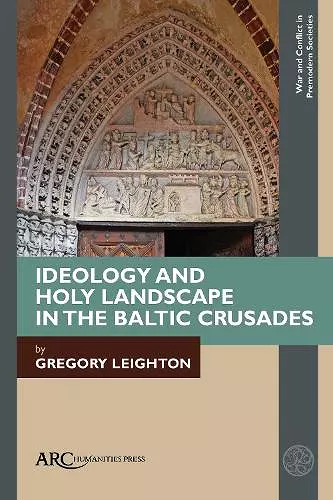
This book examines how the military orders and the ideology of crusading gave rise to a new sacred landscape in the medieval Baltic region, an outpost of Latin Christianity. Drawing on a wide variety of sources and international scholarship, the book discusses the paganism of the landscape in written sources pre-dating the crusades, in addition to the narrative, legal, and visual evidence of the crusade period. It draws out the key sacralizing elements as expressed in those sources, which structure the definition of sacred landscape, particularly martyrdom, the manifestation of the sacred, and use of relics in battle. By analyzing these aspects with Geographical Information Systems (GIS), a map of the Baltic campaigns emerges that provides a fresh approach to studying contemporary views of holy war in a region with no initial links to the loca sancta of Jerusalem or Europe.
The dominance of English in scholarship sometimes leads to a regrettable blindness toward scholarship in other languages. Laudably therefore, Gregory Leighton does not shy away from including German and Polish scholarship. Such language skills are vital here, given the considerable research output in these languages. Leighton is thus able to offer an overall convincing analysis of the Teutonic Order’s ideology from c. 1201 to 1390, when the Order worked militarily to submit to Christianity the hitherto pagan peoples populating an area largely covering the modern states of Estonia, Latvia, Lithuania, Poland, and Belarus.[...]
Leighton’s handling of a very large corpus of texts and physical remains is truly impressive. While his analyses in this book focus on establishing the Order as a self-conscious religious protagonist in the Baltic—using the maps to visualize the interconnectedness of the Order’s religious signposts—it might be worth considering an even deeper investigation into what the maps show—or don’t show: did the Order sacralize landscape as a part of conquest and conversion, or did the sacralization of landscape remain an inward “exercise” to strengthen the Order itself after military successes?
-- Torben Kjersgaard Nielsen * Speculum 99, no. 4 (October 2024): 1313-- Winner of The Association for the Advancement of Baltic Studies—Book Publication Subvention Prize 2022 (United States)
ISBN: 9781641894548
Dimensions: unknown
Weight: unknown
224 pages
New edition