Sustaining the Carrier War
The Deployment of U.S. Naval Air Power to the Pacific
Format:Hardback
Publisher:Naval Institute Press
Published:31st Mar '23
Currently unavailable, our supplier has not provided us a restock date
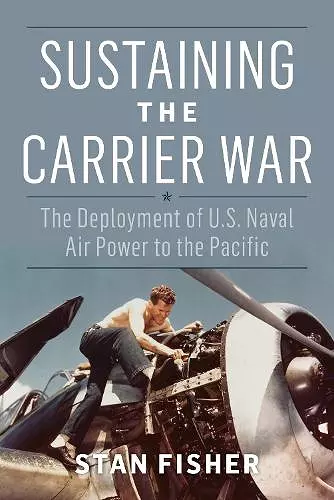
The ability of the United States Navy to fight and win a protracted war in the Pacific was not solely the result of technology, tactics, or leadership. Naval aviation maintenance played a major role in the U.S. victory over Japan in the second World War. The naval war against Japan did not achieve sustained success until enough aircraft technicians were available to support the high tempo of aviation operations that fast carrier task force doctrine demanded. When the United States realized war was imminent and ordered a drastic increase in the size of its aviation fleet, the Navy was forced to reconsider its earlier practices and develop new policies in maintenance, supply, and technical training. Not only did a shortage of technicians plague the Navy, but the scarcity of aviation supply and repair facilities in the Pacific soon caused panic in Washington. While the surface navy’s modernization of at-sea replenishment was beneficial, it did not solve the problems of sustaining war-time aircraft readiness levels sufficient to a winning a naval air war.
Fisher outlines the drastic institutional changes that accompanied an increase in aviation maintenance personnel from fewer than 10,000 to nearly 250,000 bluejackets, the complete restructuring of the naval aviation technical educational system, and the development of a highly skilled labor force. The first comprehensive study on the importance of aircraft maintenance and the aircraft technician in the age of the aircraft carrier, Sustaining the Carrier War, provides the missing link to our understanding of Great Power conflict at sea.
“Many historians have covered the carriers, planes, and pilots engaged in the naval war in the Pacific. Now, for the first time, an historian tells the stirring tale of the recruitment, training, and work of the fourth vital element in the US Navy’s victory - the enlisted maintenance technicians who kept the planes flying."—Kathleen Broome Williams, naval historian and author of Painting War
“At the Battle of Midway, the great majority of Japanese pilots actually survived, but almost all the highly trained and skilled aircraft maintainers died, with profound negative strategic consequences. This book masterfully shows how the U.S. Navy overcame a myriad of problems to belatedly create the critical aircraft maintenance capability vital for victory."—Rear Admiral Sam Cox, U.S. Navy (Ret.) - Naval Historian and former Commander of the Office of Naval Intelligence.
“Much has been written about American carriers in WWII, but practically nothing has been produced regarding how that carrier aviation force was kept in the fight. In this unique volume, Fisher “looks under the hood” to see how the USN adapted during the war years to produce the necessary aviation techs to support the world’s mightiest carrier force."—Jonathan Parshall, co-author, Shattered Sword, the Untold Story of the Battle of Midway
"Delving deeply into unpublished unit and command histories from World War II, Dr. Fisher’s book shines a light on the under-studied and under-appreciated role of the enlisted maintainer in supporting the immense aerial armada that played such a large role in the victory over Japan."—Laurence M. Burke II, author of At the Dawn of Airpower: The U.S. Army, Navy, and Marine Corps’ Approach to the Airplane, 1907–1917
ISBN: 9781682478479
Dimensions: unknown
Weight: 562g
288 pages