The Hindu Sufis of South Asia
Partition, Shrine Culture and the Sindhis in India
Format:Hardback
Publisher:Bloomsbury Publishing PLC
Published:5th Sep '19
Currently unavailable, and unfortunately no date known when it will be back
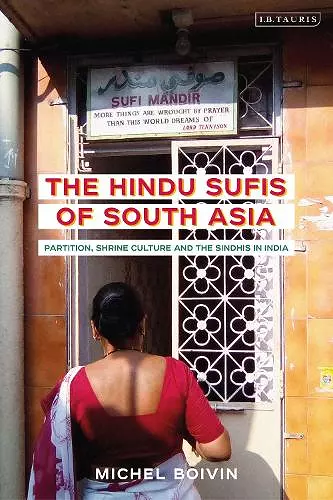
Examines the Muslim-Hindu encounter in India through the unique case of the Hindus who practise Sufism in the country
Within the complex religious landscape of modern India, the community of Sindh stands out as a powerful example of interfaith relations. This Hindu community moved to India and practiced Sufism following Sindh’s inclusion to Pakistan in the 1947 partition. Drawing on a close analysis of literature and poetry, interviews with key informants, and a reading of historic rituals and architectures, Michel Boivin demonstrates that this active religious minority has managed to retain its unique Hindu-Sufi identity amidst the rigidification of official religions in both India and Pakistan. Of particular significance, Boivin argues, was the creation of sacred spaces called darbars. These shrines include a religious building where the Hindu Sindhis worship Sufi saints, chant Sufi poetry and perform Sufi rituals. In looking at this vibrant community as a trans-religious culture capable of navigating the challenges of the modern nation state, this book is an important contribution to understanding the Muslim-Hindu encounter in India.
Fascinating ... Sheds much light on an important subject. * Asian Affairs *
Michel Boivin is highly established in this field of study, and this book demonstrates his adroit. An in-depth exploration of a subject that is of considerable interest to South Asian religious thought, it provides a new and complementary addition to the literature on Hinduism and Islam by examining the way religious norms and beliefs are carried across time and space, and how these can persist in what would be assumed to be unwelcoming terrain. -- Charles M. Ramsey, Baylor University, USA
ISBN: 9781788315319
Dimensions: unknown
Weight: 531g
256 pages