The Social Lives of Medieval Rings
Format:Hardback
Publisher:Arc Humanities Press
Published:30th Jun '25
Should be back in stock very soon
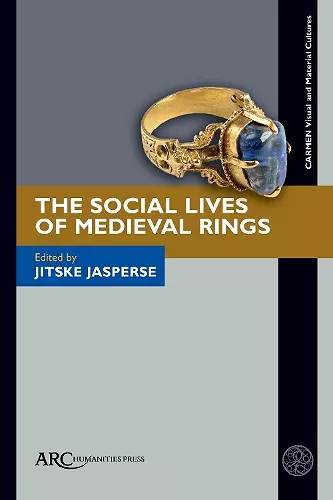
The essays in this volume focus on rings as small objects that have touched upon people, places, and events; rings have also featured in scholastic debates and form our modern museum collections. Contributors collectively argue that a closer look at these diminutive artifacts—both precious and mundane—alongside an assessment of their place within the visual, archaeological, and written record, and in museum contexts tells us more nuanced stories about how and why these small and sensory items were crafted and created connections between people and institutions. Their focus on the social aspects of medieval finger rings unites the contributions of nine scholars with backgrounds in art history, history, archaeology, museum studies, and collecting. Together their essays cover material roughly ranging from 1100 to 1500 in Iberia, France, England, Germany, Rus, and Byzantium.
Although historic rings frequently served as a social currency and as personal expressions of status, research on these functions is often complicated by an absence of evidence identifying owners and makers as well as stylistic continuities across time and space. Yet recent scholarship has emphasised the potential of these precious objects to illuminate aspects of female agency, dynastic self-fashioning, global material networks and affective expression. This volume builds on and extends that scholarship, setting out to deepen our understanding of how, as intimate sartorial accessories and signs of authority, rings could operate as portable instruments of devotion, allegiance and power.
[T]he collection as a whole is rich and stimulating. Jasperse and her contributors have assembled a treasure-trove of case-studies that whet the appetite for further consideration. It illuminates not only the multifaceted meanings of these diminutive objects but also the complex interplay between material culture, identity and meaning-making in the medieval world.
-- Stella Wisgrill * The Burlington Magazine 168 (February 2026): 179-80 *In her introduction to the essay collection, The Social Lives of Medieval Rings, the editor, Jitske Jasperse, invites readers to take in the eight contributions “individually” (27). She also suggests that the book as a whole “argues” for “more nuanced stories” about how rings were crafted and forged connections among people. Given the geographical, chronological, and methodological disparities in the essays, the former way of engaging with the book (dipping into it to consult a specific case study) by specialists interested in (say) early modern Galician saints’ cults, or Depression-era American antiquity collections, or Islamic Anadalusi signets, will likely prevail. However, anyone who plows through all 250-odd pages of text will certainly emerge with a more sophisticated appreciation for the use of rings in western Eurasian cultures after Roman hegemony. And just the book’s abundant, well-labelled, and high-quality images would be enough to make the effort worthwhile.
-- Paolo Squatriti * The Medieval Review (2026): 2026.03.09 *Museum curators have often deemed rings, small carefully wrought bits of precious metals and gemstones, as “too small, too difficult to display,” but thanks to the persistence of dedicated scholars, they now have pride of place (233). Jitske Jasperse has assembled top-notch researchers whose essays reveal that medieval rings were thick with meaning, worn by people of all ranks and genders. Whether they are straw or gold, modest or studded lavishly with gemstones, they are more than precious objects. Using archaeological, artistic, documentary, and literary sources, these scholars found rings that were worn every day as relics, mementos, personal display, affection, and in Christian societies as wedding and betrothal rings. The contributors argue that rings are valuable bits of the past that mark important differences between men and women, laypersons and clerics. They allow us a glimpse at what people valued.
Overall, as the authors of this insightful and fascinating book make clear, rings open worlds of meaning in personal taste, design, identity, sentiments, and status.
-- Theresa Earenfight * Bulletin for Spanish and Portuguese Historical Studies 50, no. 1 (2026): 121-ISBN: 9781802700947
Dimensions: unknown
Weight: unknown
270 pages
New edition