Dibia’s World: Life on an Early Sugar Plantation
Format:Paperback
Publisher:Liverpool University Press
Published:1st May '26
Currently unavailable, and unfortunately no date known when it will be back
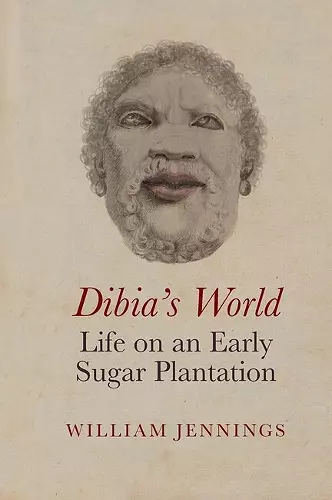
Dibia was educated in Africa, stolen across the sea and sold into slavery. He spent the rest of his life on a sugar plantation, where he worked with Agoüya, drank Aboré’s rum, married Izabelle and had a son named Paul. This book tells the story of the community he lived in with a hundred others in a colonial outpost of the Caribbean. It depicts the everyday life of enslaved Africans and Native Americans in remarkable detail, showing their names, relationships, skills, health and interactions, as they contended with and resisted their enslavement. Most studies of plantation life examine well-established colonies in the century before abolition. This work provides a counterpoint by depicting the founding population of an African-American community in the early years of the industrial sugar plantation complex. Drawing on a planter’s manuscript, shipping records, missionary accounts and seventeenth-century scraps of paper, Dibia’s World will appeal to specialists as well as general readers interested in the early Atlantic world, Creole societies, slavery and African-American history.
A tour de force of scholarship that gives us a rare portrait of an African slave community in the late seventeenth century.
Prof. Trevor Burnard, Director of the Wilberforce Institute for the Study of Slavery and Emancipation at the University of Hull
‘Dibia’s World adds in many ways to what we know about slavery in the early Caribbean. Jennings has introduced the Goupy manuscript to a broader community of scholars and provided a compelling example of the array of questions that can be answered within its pages.’ Jordan Smith, New West Indian Guide
‘An achievement in collective biography that offers an immersion into life and death on a sugar plantation during a period when the racial prejudice, legal structures, and cultural hybridization that would characterize later slave societies of the circum-Caribbean were in earlier stages of development.’ Elyssa Gage, Slavery & Abolition
ISBN: 9781805966319
Dimensions: unknown
Weight: unknown
224 pages