Nuclear Gaia
Media Archives of Planetary Harm
Agnieszka Jelewska author Michal Krawczak author
Format:Hardback
Publisher:Intellect
Published:20th Oct '25
Currently unavailable, and unfortunately no date known when it will be back
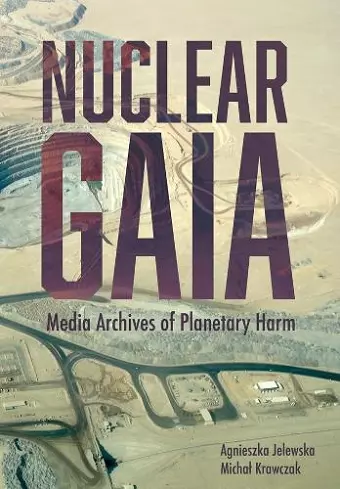
Describes the transformations we have witnessed due to the development of nuclear science and technology, accelerating policies interdependent on energy, and military procedures that have led us to make a provocative claim that, in many respects, planet Earth is getting closer to the embodiment of the project we call Nuclear Gaia.
The book examines media archives and online platforms that recover data and memory and shape community knowledge of nuclear events from the distant and nearer past. These are the pieces of evidence that we are on the eve of creating new forms of social justice, carried out by open-source investigations (OSINT) groups, independent researchers, artists, media makers, activists, local communities and civic groups.
Thus, analysing nuclear processes and their social and environmental consequences is no longer the exclusive domain of experts, scientists, politicians and the military. The authors hope that such communities’ practices and decolonial discourses, combined with the critiques within our methodology as post-nuclear media studies, can also change the fate of nuclear industry victims by creating media space to discuss and regain justice as socially sanctioned and shared rules for understanding and using nuclear energy both in past and the future.
Nuclear Gaia: Media Archives of Planetary Harm is a rich intervention in the field of nuclear studies. It offers not only new case studies and materials, but also new conceptual insights and tools by which to think about them. By viewing nuclear power through a range of ecological and scientific lenses, the authors have arrived at a highly original, path-breaking interpretation of their subject. This landmark study promises to pave the way from nuclear to postnuclear studies, where AI, quantum mechanics and nuclear technologies will merge in ways we are only just beginning to imagine.
-- Chris Hill, Associate Professor of History, University of South Wales.
Let’s stop debating how to prevent apocalypse and accept that the end of the world has already happened. Based on superb scholarship and crossing epistemic terrains which are normally bordered and secured, Nuclear Gaia tells the story of how that end came about. Not since Virilio has anyone written with such clarity and scope on the darkness of human destinies.
-- Julian Reid, professor of International Relations at the University of Lapland, Finland and Research Fellow at the Centre for Apocalypse and Post-Apocalypse Studies (CAPAS) at Heidelberg University, GermISBN: 9781835951538
Dimensions: 244mm x 170mm x 16mm
Weight: 616g
258 pages