Conflicting Loyalties in the Balkans
The Great Powers, the Ottoman Empire and Nation-building
Hannes Grandits editor Nathalie Clayer editor Robert Pichler editor
Format:Hardback
Publisher:Bloomsbury Publishing PLC
Published:29th Mar '11
Currently unavailable, and unfortunately no date known when it will be back
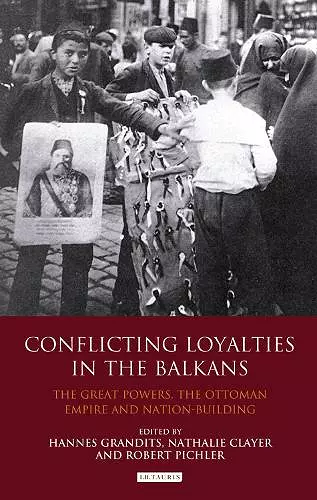
The collapse of the Ottoman Empire resulted in the birth of new nation states in the Balkans in the late nineteenth and early twentieth centuries. 'Conflicting Loyalties in the Balkans' explores the effects of the Ottoman reform era upon Balkan societies in order to shed much-needed light on the history of this region during the early nation-state period. Focusing on developments which go beyond the over-researched dimension of political or elite discourse, this book offers insights into the complex ways in which Balkan societies were transformed from different regional viewpoints - focusing on the interplay between Great Power politics, state reforms and social dynamics on the ground. A thorough investigation of the conflicting loyalties which has shaped the political framework of the post-Ottoman Balkans, this is an important and fascinating insight into the logic and contradictions of daily life in a crucial period of Balkan and Ottoman history.
'The 20th century history of the Balkans cannot be understood without the careful analysis of its late- and post-Ottoman complexities of societal life. The marvellously composed volume offers surprising insights into a variety of social spheres, where local actors were exposed to contradicting constraints of multiple, restricted and competing loyalties.' - Professor Karl Kaser, Centre for Southeast European History, University of Graz; 'The historiography of Ottoman rule in the Balkans has successfully projected the image of an oppressive regime, culturally foreign to the region and a hindrance to social and economic development. Reflecting and reproducing the orientalist discourse pervasive in Western thought, this perspective has posited in the last analysis a civilisational contradiction between a stagnant and despotic East and a progressist and liberal West. What is needed are fresh approaches to the study of state-society relations, of everyday life in urban centres, in the core provinces as well as on the periphery of the empire, of the modalities of mental mapping and interregional networking, and of the ways in which intermediary groups influenced the formation of confessional, ethnic and national identities.The papers brought together in this volume address all these issues. They represent a revisionary effort to grasp and illustrate the basically fluid and ambiguous character of power relationships, political loyalties and boundaries of social belonging in late- and post-Ottoman Balkans. Many a nationalist myth is deconstructed in the process, and the veracity of master narratives are disputed convincingly.' - Dr. Fikret Adanir, Professor of History, Sabanci University, Istanbul
ISBN: 9781848854772
Dimensions: unknown
Weight: 572g
368 pages