Te Hau Kāinga
The Māori Home Front during the Second World War
Angela Wanhalla author Lachy Paterson author Ross Webb author Sarah Christie author Erica Newman author
Format:Hardback
Publisher:Auckland University Press
Published:7th Nov '24
Currently unavailable, our supplier has not provided us a restock date
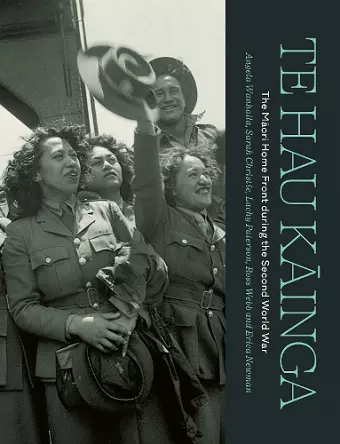
Taking readers to the farms and factories, the marae and churches where Māori lived, worked and raised their families, Te Hau Kāinga tells the story of the profound transformation in Māori life during the Second World War.
While the Māori Battalion fought overseas, the Māori War Effort Organisation and its tribal committees engaged Māori men and women throughout Aotearoa in the home guard, the women’s auxiliary forces, and national agricultural and industrial production. Māori mobilisation was an exercise of rangatiratanga and it changed how Māori engaged with the state. And, as Māori men and women took up new roles, the war was to become a watershed event for Māori society that set the stage for post-war urbanisation.
From ammunition factories to kūmara fields, from Te Puea Hērangi to Te Paipera Tapu, Te Hau Kāinga provides the first substantial account of how hapori Māori were shaped by the wartime experience at home. It is a story of sacrifice and remarkable resilience among whānau, hapū and iwi Māori.
Te Hau Kāinga is published alongside its companion volume Raupanga: Ngā Pito Kōrero o te Pakanga Tuarua nō te Hau Kāinga, edited by Angela Wanhalla and Lachy Paterson. Raupanga features thirty-five succinct, illustrated essays exploring the Māori home front, translated into te reo Māori by Lachy Paterson.
‘The war caused revolutionary changes at all levels: it proved to be a stimulus for the Māori leadership at home as well as laying the basis for new developments in the following years. This book provides a lens for understanding the years both before and after the war.’ — Dame Claudia Orange
‘The depth and detail presented here affords a greater understanding of the critical roles and significant contributions of Māori that previously have not been explained and accounted for, or have not been recorded in such detail. There is a great need to supply information on the Second World War from a Māori perspective, and this fills a void that has been wanting and waiting for rich and detailed contributions.’ — Professor Tangiwai Rewi, Dean of Māori and Indigenous Studies, Te Whare Wānanga o Waikato – University of Waikato
‘Sir Apirana Ngata spoke of Māori contribution to the war effort as the price of citizenship; it is a price which should not have had to be paid, and this book reminds us what a huge opportunity for Māori self-determination was destroyed by the power structure at war’s end.’ — Jim McAloon, Professor of History, Te Herenga Waka Victoria University of Wellington
‘This is not simply a story of Māori during the war. Two themes stood out for me: first, the enormous cost carried by Māori during the war and its impact on communities, whenua and moana. Second, Māori sacrifice – both in terms of human life and hardship – are alongside stories of creative survival in the face of the long-term effects of colonisation. Te Hau Kāinga will attract a general readership, both Pākehā and Māori, while contributing to scholarly arguments around indigenous responses to global war.’ — Rowan Light, Waipapa Taumata Rau University of Auckland
ISBN: 9781869409999
Dimensions: 248mm x 190mm x 27mm
Weight: unknown
296 pages