Herring Man, The
Format:Paperback
Publisher:Parthian Books
Published:3rd Apr '22
Currently unavailable, our supplier has not provided us a restock date
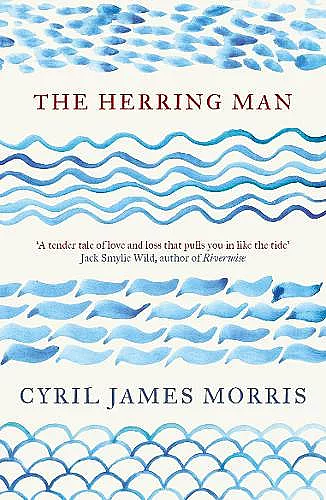
"A tender tale of love and loss that pulls you in like the tide" - Jack Smylie Wild, Riverwise "What happens when the old stories are lost? The Herring Man explores the hinterland where realities and memories meet through peeling back the past as a young man learns how to give an old friend his long-earned peace. A touching, enchanting tale." – David Lloyd-Owen, A Wilder Wales
The Herring Man is a modern-day fable, beautifully illustrated by the author, about dealing with grief and searching for hope.The Herring Man is a modern-day fable, beautifully illustrated by the author, about dealing with grief and searching for hope.
Part of a family's heritage is the tales they leave behind, but what happens if you don't have the voice to tell them? Known locally as the Herring Man, Samuel Evans was a fisherman and sailor. He travelled across the seas, sketching down his experiences and leaving his adventure stories as a legacy. His grandson Gwyn is the only living relative left to tell his tales, but he spends his days in silent isolation, fixing damaged fishing nets with the net-needle Samuel carved from a walrus tusk. When a lonely young boy becomes intrigued with his boat and offers to help fix it, they form a bond that gives him hope he'll be able to speak again. As Gwyn starts talking about the past he begins to leave a legacy of his own. A riddle for the young boy to solve. “A tender tale of love and loss that pulls you in like the tide” – Jack Smylie Wild, author of Riverwise "What happens when the old stories are lost? The Herring Man explores the hinterland where realities and memories meet through peeling back the past as a young man learns how to give an old friend his long-earned peace. A touching, enchanting tale." – David Lloyd-Owen, editor of A Wilder Wales -- Publisher: Parthian Books
This is a story in two parts. In the first, a third-person narrator describes the life of Gwyn Evans, an old man who lives alone after the death of his wife and who has got out of the habit of communing with anyone. His father was a boatbuilder, and his grandfather Samuel a fisherman and seafarer who in his time sailed the seven seas. Gwyn knows many of his grandfather’s stories, passed down through the family, and he has Samuel’s logbook which details his many voyages and landfalls. Gwyn feels it is important that these stories should somehow live on, but the family line ends with him, and with him the stories will die. Then a teenage boy starts hanging round the cottage, longing to inspect the last boat Gwyn’s father built. The lad is discouraged at first, Gwyn fending him off with stuttering monosyllables, but the boy persists, and eventually they form a relationship when the boy offers to repaint the boat and joins in Gwyn’s net-making — an activity he persists in even though he no longer fishes. In the process, Gwyn tells the boy some of his grandfather’s tales, about his voyages to the Bahamas, to Nantucket, through the Strait of Magellan to the Pacific and the Aleutians. Part Two, ‘The Boy’, shifts to a first-person narrative in which the lad, older now, takes up the story. Gwyn has died and has left the cottage, the boat, and a mysterious shed that is always kept locked, to the boy who never knew his own father and has come to consider Gwyn as a surrogate. Gwyn, too, with time, came to consider the boy a surrogate son, hoping that the family stories would survive and be told by him. There are mysteries, though. Why does Gwyn comb the beach looking for pebbles of a particular size and shape which he aligns carefully in boxes? Why does he guard the shed, reluctant to let the boy in there alone? Why does he obsessively make nets even though he no longer fishes? After Gwyn’s death, the boy goes to live in the cottage, he pores over the logbook, and eventually he unlocks the shed to explore its depths, where he discovers things which explain Gwyn’s taciturnity, the net-making, the boxes of pebbles. To tell you what they are, however, would spoil the story. The Herring Man is beautifully produced, with deep flaps to the covers and generous spacing of the text. It is illustrated by the author with delicate watercolour vignettes — fragments, almost — depicting flying fish, a hand holding a key, the bow of a clinker-built boat, an old tin of Brasso. The Herring Man is an extended short story and without the illustrations and generous lay-out it would not have reached its 70 pages. The result, however, is a book which is a pleasure to handle and equally a pleasure to read. -- John Barnie @ www.gwales.com
ISBN: 9781913640613
Dimensions: 198mm x 129mm x 15mm
Weight: unknown
80 pages