Monarchical Encounters and Clashes in the Iberian-American Long Nineteenth Century
David San Narciso editor Isabel Corrêa da Silva editor
Format:Hardback
Publisher:Springer Nature Switzerland AG
Published:4th Jul '26
Currently unavailable, and unfortunately no date known when it will be back
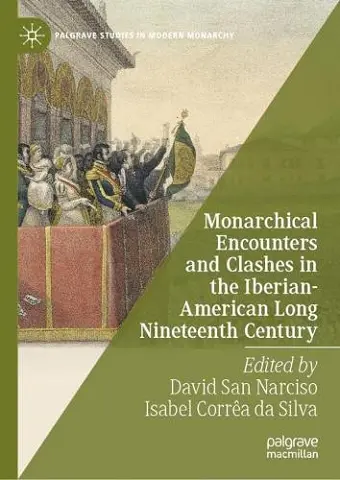
This book demonstrates how monarchy adjusted to the contours of modernity in remarkably diverse kinds of ways and contexts, preserving a central role in the configuration of the post-revolutionary world. It focuses on three geographically and politically connected frameworks: Spain, Portugal, and the new Latin American countries that emerged from the Iberian colonial territories. It analyses the intense and often conflicting processes and negotiations that characterized the monarchy’s adaptation to post-revolutionary modernity and its insertion into a liberal parliamentary and constitutional system. Combining monarchical and post-revolutionary principles was one of the most notable challenges that political regimes faced after 1800. In the Portuguese and Spanish cases, as in others, it was necessary to seek a new place for the crown in constitutional parliamentarism. Liberals managed to do this by uniting king and parliament as elements of national identity and sovereign power respectively. In Latin America, monarchy was seen as a solution to the potential instability of the nascent independent states. In these cases, in addition to crown’s adaptation to a constitutional regime, there was also the need to find monarchs and to legitimize them. The cases of Mexico and Brazil were indicative of these challenges and of the difficulties they brought.
ISBN: 9783032076007
Dimensions: unknown
Weight: unknown
437 pages