Export Empire
German Soft Power in Southeastern Europe, 1890–1945
Format:Hardback
Publisher:Cambridge University Press
Published:5th Jan '16
Currently unavailable, and unfortunately no date known when it will be back
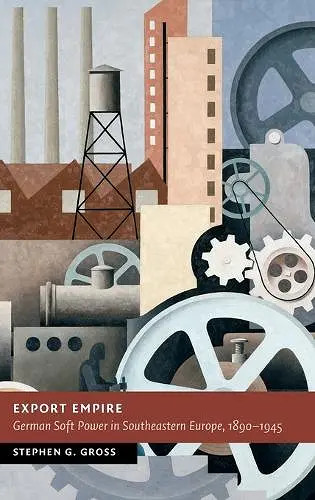
A major new interpretation of Nazi influence in southeastern Europe through the concepts of soft power and informal empire.
A major new interpretation of Nazi influence in southeastern Europe during the first half of the twentieth century. This book explores the emergence of German soft power and informal economic empire, and their role in enabling the militarisation of the German economy and the Third Reich's territorial conquests after 1939.German imperialism in Europe evokes images of military aggression and ethnic cleansing. Yet, even under the Third Reich, Germans deployed more subtle forms of influence that can be called soft power or informal imperialism. Stephen G. Gross examines how, between 1918 and 1941, German businessmen and academics turned their nation - an economic wreck after World War I - into the single largest trading partner with the Balkan states, their primary source for development aid and their diplomatic patron. Building on traditions from the 1890s and working through transnational trade fairs, chambers of commerce, educational exchange programmes and development projects, Germans collaborated with Croatians, Serbians and Romanians to create a continental bloc, and to exclude Jews from commerce. By gaining access to critical resources during a global depression, the proponents of soft power enabled Hitler to militarise the German economy and helped make the Third Reich's territorial conquests after 1939 economically possible.
'Overall, this is an extremely valuable book for economic historians as it underlines that the study of international trade and economic development cannot be separated from the broader power struggle during the period 1890–1945. In doing so, the book sheds light on the previously unknown mechanisms that contributed to the rise of German empire at the heart of Europe, a process which eventually led to the Second World War. In this regard, it is likely to remain a key reference work for years to come on German imperial and economic history.' A. Coşkun Tunçer, Economic History Review
'An absorbing portrait of German interest in Yugoslavia and Romania during the first half of the long twentieth century.' Patricia Clavin, The Journal of Modern History
ISBN: 9781107112254
Dimensions: 235mm x 158mm x 26mm
Weight: 690g
398 pages