Fueling Mexico
Energy and Environment, 1850–1950
Format:Hardback
Publisher:Cambridge University Press
Published:24th Jun '21
Currently unavailable, and unfortunately no date known when it will be back
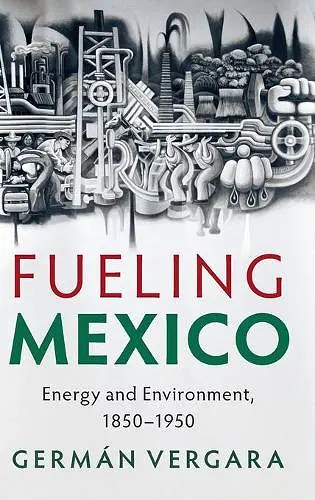
Germán Vergara explains how, when, and why fossil fuels (oil, coal, and natural gas) became the basis of Mexican society.
Germán Vergara explains how, when, and why fossil fuels became the basis of Mexican society, comparing Mexico's fossil transition with those of other countries. The transition from a solar energy regime to one dependent on fossil fuels transformed Mexico's economy, politics, and culture - with serious environmental and social consequences.Around the 1830s, parts of Mexico began industrializing using water and wood. By the 1880s, this model faced a growing energy and ecological bottleneck. By the 1950s, fossil fuels powered most of Mexico's economy and society. Looking to the north and across the Atlantic, late nineteenth-century officials and elites concluded that fossil fuels would solve Mexico's energy problem and Mexican industry began introducing coal. But limited domestic deposits and high costs meant that coal never became king in Mexico. Oil instead became the favored fuel for manufacture, transport, and electricity generation. This shift, however, created a paradox of perennial scarcity amidst energy abundance: every new influx of fossil energy led to increased demand. Germán Vergara shows how the decision to power the country's economy with fossil fuels locked Mexico in a cycle of endless, fossil-fueled growth - with serious environmental and social consequences.
'Fueling Mexico convincingly places wood, water, coal, and oil at the center of Mexico's historical narrative while undermining Eurocentric approaches to energy transitions. Expertly written and deeply researched, this superb energy history, the first of its kind for Latin America, invites scholars and students alike to rethink their understanding of Mexico's momentous economic and social transformations.' Matthew Vitz, University of California, San Diego
'Vergara provides an exquisite analysis of a captivating transition – Mexico's conversion from an agrarian country to an industrialized nation. Focusing on a complete panorama of energy, Vergara rewrites the modern history of Mexico accounting for how fossil fuels seeped into all aspects of society. The result is a tremendous piece of scholarship.' Emily Wakild, Boise State University
'Fueling Mexico is, unquestionably, a major contribution to the historiography of Mexico's environmental history and groundwork for Latin American energy history.' Viridiana Hernandez Fernandez, H-Net Reviews
'Fueling Mexico skillfully brings together histories of science, infrastructure, politics, and the environment to show how energy regimes underlay many of the hallmarks of Mexico's trajectory from 1850 to 1950.' Casey Marina Lurtz, Johns Hopkins University
'This highly accessible study is a must read for students of modern Mexican and environmental history … Highly recommended.' D. Newcomer, Choice
Vergara's superb new book, Fueling Mexico, offers a detailed, vivid, and incisive portrait of energy in Mexican history … clear prose and impressively deep research produce vivid, compelling chapters.' Edward Beatty, Hispanic American Historical Review
'Fueling Mexico is a powerful and foundational work of history. It provides an energy framework that until this book's publication had not been fully applied to Mexican history. Its revisioning of historical change through energy regime transitions will make historians of Mexico rethink the importance of energy production and use in modern Mexican history.' Justin Castro, H-Net
'Vergara's refreshing analysis makes it suitable for graduate-level seminars on environmental history, Latin American and Mexican history, and science and technology studies. Fueling Mexico is, unquestionably, a major contribution to the historiography of Mexico's environmental history and groundwork for Latin American energy history.' Viridiana Hernandez Fernandez, H-Net
ISBN: 9781108831277
Dimensions: 235mm x 157mm x 26mm
Weight: 650g
336 pages