The Crossing
Format:Paperback
Publisher:Parthian Books
Published:1st Apr '21
Should be back in stock very soon
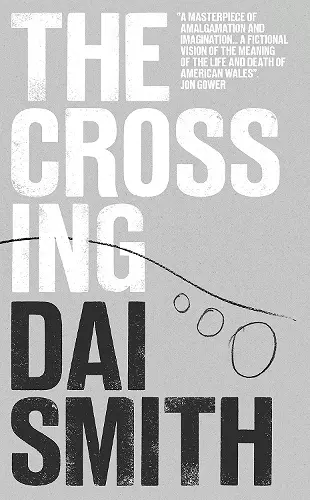
“A masterpiece of amalgamation and imagination... is a fictional vision of the meaning of the life and death of American Wales”. Jon Gower “At times the writing hovers on the last edge of prose, aspiring to be poetry, and like poetry demands to be read aloud.” Wales Arts Review “In probing the meaning of Welsh lives in the twentieth century Dai Smith’s novels offer sophisticated meditations on history and community, the past and the present...” Agenda
The Crossing bridges the past and the present and connects Wales with America, as it tells of coal owners and coal workers in the age of great transatlantic liners and fortunes to be made.The Crossing bridges the past and the present and connects Wales with America, as it tells of coal owners and coal workers in the age of great transatlantic liners and fortunes to be made. At its heart is a father’s search for his daughter in Welsh valleys no longer proud, where creaming off regeneration grants has replaced coal mining as a way of life and development parks now stand where once did pit head wheels. It follows a lifetime’s search for lost love, the sinking of a great ship in a great war, misplaced family and forlorn hopes where individual lives are shaped and fated in the shadow of modernity and the cold hand of progress. This brave, bold and challenging work conjures a vivid cast of characters into being and offering – with ready vim and ample vigour – their compelling, complex and ultimately telling story.
The Crossing is a complex tour de force that deserves to be read more than once. Spanning more than a century, the narrative embraces a combination of real-life and fictional events and characters, which often had me turning to Google for clarification and detail. The intertwined story lines focus on the coal industry of south Wales, from the boom years of the late-nineteenth and early-twentieth centuries, through nationalisation, decline, the miners’ strike of 1984-85, and the subsequent reliance on public and EU funding for regeneration. The main characters of the two story lines are D. A. Thomas, Lord Rhondda (1856-1918), and modern-day photographer Billy, who are linked through ‘the Secretary’ in ways the reader does not fully understand until the end. There are mysteries and secrets here, and parallels between the stories that range from the individual human level to questions of power and politics – failed love affairs, uncertain paternity, parent-child relationships and their ongoing impact; the use and abuse of power, selfish motivations wrapped up as altruism, age-old issues of class divisions, greed and philanthropy. The risk is of a heavy read, and certainly the novel has to be read with some care and attention. But the modern-day story has a gritty forward thrust, and the earlier story is told through an intriguing web of narrative modes that deftly draw the reader in and on: first person, newspaper cuttings, diary entries and documents from the Taliesin Arthur Lloyd papers, purportedly held by the National Library of Wales. This narrative style reminded me of Stuart Evans’s unsung masterpiece, The Caves of Alienation, which was reissued in Parthian’s Library of Wales series edited by none other than The Crossing’s author, Dai Smith. It is a style that teases the reader’s curiosity. ‘And so,’ writes the Secretary at one point, ‘I must choose which truth to tell.’ This is perhaps the central conundrum – that one set of facts can give rise to many truths, as a result of personal interpretations and angles of perception, distortions and misunderstandings, and vital missing information. In short, The Crossing is a challenging, fascinating read that works on many levels, from the personal to the political. It is very much worth the effort. -- Suzy Ceulan Hughes @ www.gwales.com
ISBN: 9781912681815
Dimensions: unknown
Weight: unknown
200 pages